
The disconnect no one talks about
You're in bed. Your partner is present, attentive, doing exactly what usually works. But you're watching it happen from three feet away, like you're observing someone else's experience. Your body's on autopilot. Your mind is somewhere else entirely. This isn't disinterest. This isn't about your partner. This is what disconnection feels like, and it's wildly common, especially during partnered sex.
The frustrating part? It shows up even when desire is there. Even when you love your partner. Even when everything should feel good.
Why partnered sex creates disconnection differently than solo play
Here's the neurology piece. When you're alone, your nervous system is in control. You set the pace, the pressure, the rhythm. Your brain builds arousal in isolation. But partnered sex introduces variables you don't control: timing, pressure, attention patterns, the awareness of being watched, the need to sync your body to someone else's timeline.
For many people, especially those with histories of tension in relationships or bodies that need time to warm up, partnered sex can feel like performance instead of presence. Your nervous system shifts into monitoring mode. Am I taking too long? Is my body responding the right way? What's my partner thinking? That internal narration pulls you out of sensation.
Additionally, partnered stimulation often misses the exact spot or pressure that actually builds arousal for you. Partners usually aim for general clitoral stimulation, not the specific nerve pathways that spark your particular wiring. That mismatch between what's happening and what your body needs to feel creates a gap between effort and sensation. Disconnection fills that gap.
The role clitoral vibrators play in reconnection
This is where lemon vibrators change the game. Air-suction clitoral vibrators like the Lem work differently than hands or traditional vibrators. The suction pattern stimulates deeper nerve clusters beneath the clitoral surface, creating a sensation that's distinct and recognizable to your body. That specificity matters.
When you introduce a clitoral vibrator during partnered sex, you're not replacing your partner's touch. You're adding precision. You're saying to your nervous system, "Here's the exact sensation that gets you present." Once your body recognizes that signal, arousal builds faster. Presence follows.
Many couples find that using lemon clitoral vibrators together actually deepens connection because both partners move from watching to collaborating. Your partner sees you respond. You feel less pressure to perform and more freedom to actually feel.
How to introduce it without it feeling clinical
Timing matters. Don't bring it up mid-intimacy when you're already in the middle of feeling disconnected. Instead, have the conversation outside the bedroom. "I've noticed it takes me a bit longer to feel present during sex, and I think using a vibrator might help. I want to try it together." That's not a rejection. That's information.
Start with solo exploration first. Use your lemon vibrator alone a few times, figure out the intensity level that wakes up your body. Try different patterns. Some people respond to the lower settings, while others need pattern 3 or 4 to actually feel sensation breaking through. The goal is knowing exactly what reconnects you before you add a partner to the equation.
When you integrate it during partnered sex, begin with foreplay rather than during the main event. Let your partner use hands or mouth while you use your lemon vibrator on yourself. This removes pressure from them to provide the "right" stimulation and lets you focus on what your body actually needs. After a few minutes of that combined approach, presence usually kicks in and everything becomes easier.
Reading your body's signals
Disconnection sometimes masks other things. If you're feeling numb or distant during partnered sex, check in with your body about a few specifics.
Are you physically tense? Shoulder tension, jaw clenching, pelvic floor holding tightness. That tension creates a barrier between you and sensation. Before using your lemon vibrator, try breathing deliberately. Two counts in, four counts out, several rounds. Relax your jaw. Notice if your shoulders are up near your ears and drop them. Your clitoral vibrator will work better if your nervous system isn't already running on high alert.
Is the pressure right? Sometimes disconnection happens because standard hand stimulation is too gentle or too broad. Your partner means well, but they're covering a wide area instead of focusing on the exact spot that matters. Your lemon clitoral vibrator can pinpoint that sensation in a way hands often can't. Test different positions. Straight on might feel better than angled. Experiment.
Is the timing off? If foreplay consistently feels too rushed or too long, that affects presence. Talk about pacing with your partner. Some people need 10 minutes to feel genuinely aroused. Others need 25. Using a vibrator means you can match your body's timeline while your partner isn't left guessing. The Lem, for example, gives you independent control over your own arousal building.
When disconnection is about the relationship, not the body
Sometimes physical disconnection during sex points to emotional distance. You might feel disconnected from pleasure because you're actually disconnected from your partner. That's important to name.
If you've been arguing, if there's unresolved tension, if trust feels shaky, or if you're carrying resentment, a vibrator won't fix that. It might make the gap more obvious. That's actually useful information. A clitoral vibrator clarifies what's actually a body issue versus what's a relationship issue.
Before assuming you need a tool, ask yourself: Do I feel emotionally close to my partner right now? Is there something between us that needs addressing? If the answer is yes, the conversation starts there, not with introducing toys. But if the answer is no, if your emotional connection is solid and your body just needs more targeted stimulation to wake up, then a lemon vibrator becomes the bridge.
Read the article on how to use lemon vibrators when rebuilding intimacy after relationship conflict if relationship tension is the underlying piece.
The intensity issue
Here's something that surprises people. If you've been using a vibrator solo for a while, partnered stimulation might feel less intense by comparison. That's not your partner failing. That's your nervous system recalibrating to stronger sensation. If that's happening, it doesn't mean you're broken. It means you need to gradually reduce your solo vibrator intensity, or you need your partner to use external vibration during partnered sex.
Some couples solve this by having the receiving partner use their own lemon vibrator while the other partner focuses on penetration, touch, or oral stimulation. You're getting the exact intensity your body knows, while still being intimate. That's not selfish. That's informed.
If clitoral numbness has developed over time, see the guide on how to use lemon vibrators when clitoral numbness develops over time.
When to try a different approach entirely
Sometimes disconnection during partnered sex means your body needs something the current setup isn't offering. Maybe you need to explore pleasure without penetration entirely. Maybe you're experiencing arousal that takes longer to build with age, and that timeline shift needs acknowledgment.
Or maybe partnered sex as it's structured just doesn't work for your body, and that's okay. Some people find that pleasure looks different for them: solo time with their lemon clitoral vibrator is genuinely more satisfying than partnered sex. That's not failure. That's self knowledge.
Moving from disconnected to present
The path back to presence during partnered sex usually starts with acknowledging that the disconnection is real, not something to push through or feel guilty about. Then it's about figuring out what your body actually needs. Sometimes that's a specific vibrator. Sometimes that's a conversation about pacing. Sometimes that's both.
Using a lemon vibrator during partnered sex isn't a workaround for a broken system. It's a tool for clarity. It tells your nervous system exactly what wakes you up. Once your partner understands that signal, sex becomes collaborative instead of performed. Presence follows naturally.
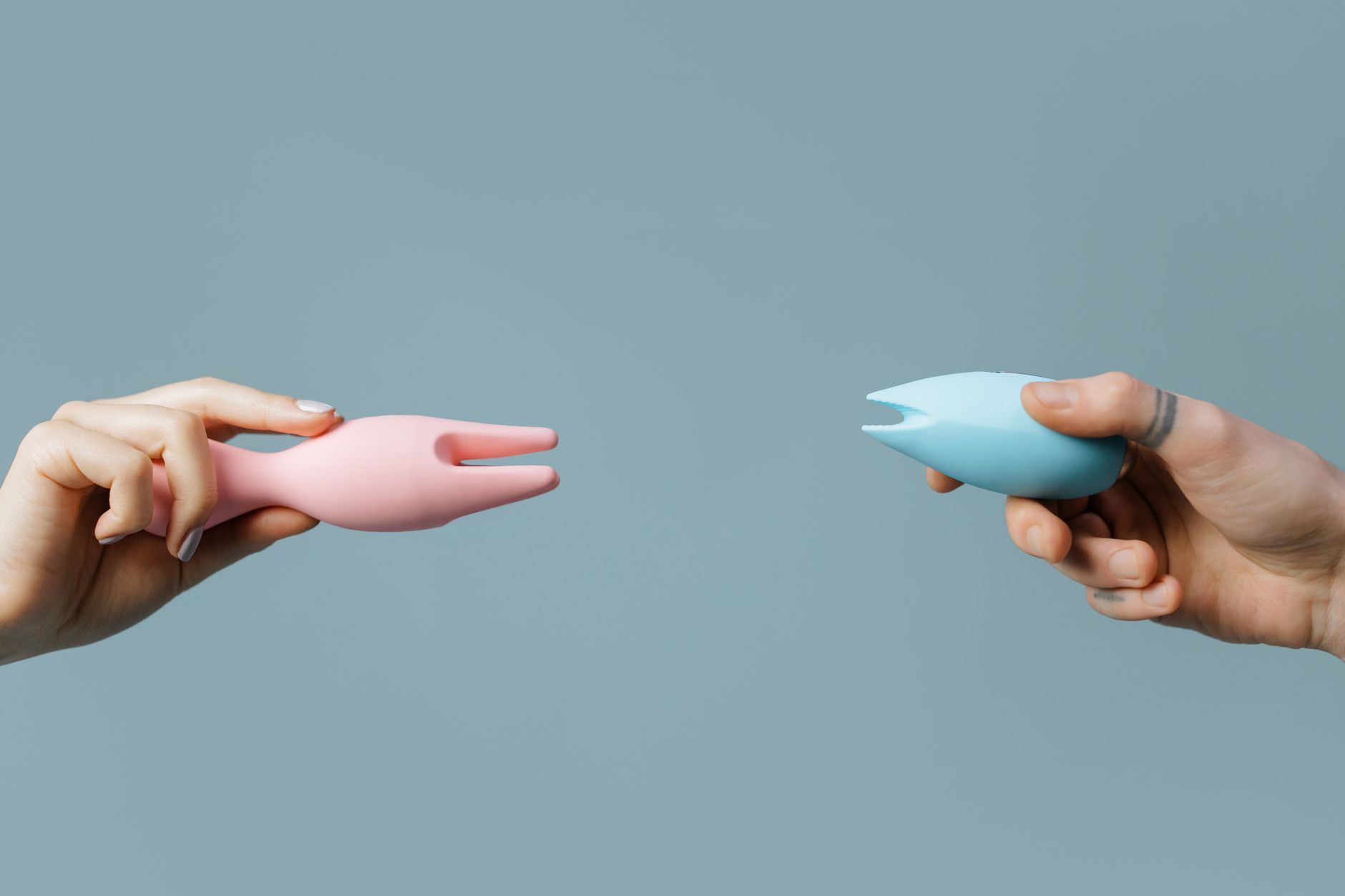
Photo by cottonbro studio on Pexels
FAQ
Will using a vibrator during partnered sex make my partner feel inadequate?
Not if you frame it right. The conversation is "My body needs this specific sensation to feel present" not "You're not good enough." Most partners actually feel relieved. They've probably sensed the disconnection and felt responsible for it. Introducing a vibrator shifts that from blame to collaboration. You're not asking your partner to do something differently. You're adding a tool that works for your body. That's information they can work with.
How do I know if disconnection is about the relationship or just my body?
Ask yourself three questions. Do I feel emotionally close to my partner outside the bedroom? Do I feel safe being vulnerable with them? Do I trust them? If all three answers are yes, disconnection during sex is likely a body signal. If the answers are fuzzy or no, there's relationship work to do first. A vibrator amplifies what's already there, so clarity matters.
Is it normal to feel more pleasure with a vibrator than with your partner's hands or body?
Completely normal. Vibrators provide a specific, consistent stimulus that hands can't replicate. Your nervous system responds to that precision. That doesn't mean your partner isn't enough. It means your body has wiring that responds better to particular types of stimulation. Many couples use that knowledge to collaborate. Your partner provides one type of sensation while your lemon vibrator provides another. The combination is often better than either alone.
What intensity level should I start with for partnered sex?
Start lower than you use solo. If you usually use pattern 3 or 4 alone, begin at pattern 1 or 2 during partnered sex. Your nervous system is already processing your partner's presence and touch. Adding lower-intensity vibration means you're not overwhelming yourself. You can always increase once you get comfortable. Most people find that lower settings actually help them stay present because they're not chasing sensation.
How long does it usually take to feel reconnected during sex after introducing a vibrator?
Most people notice a shift within the first few times they try it. Your body recognizes the sensation quickly. But true presence, where you're relaxed and genuinely enjoying the experience without any self-monitoring, usually takes 3-5 encounters. You're building new neural pathways. Give yourself that runway.
Can clitoral vibrators help if disconnection is coming from trauma or dissociation?
Vibrators can help some people return to sensation, but if disconnection is rooted in trauma or dissociation, that's worth exploring with a trauma-informed therapist first. A vibrator alone won't reprocess trauma. But paired with therapeutic work, it can sometimes help your body remember what presence feels like. Don't use it as a workaround for deeper healing that needs professional support.