Here's the thing about new relationship nervous systems
When you're with someone new, your entire body is in a mild state of alert. You're tracking their breathing, reading their signals, managing the vulnerability of being seen. That activation is actually arousal.but it's also a kind of sensory noise.
Add a lemon clitoral vibrator into that mix, and something that would feel amazing on a regular Tuesday suddenly feels like too much information arriving too fast. Your clitoris is sensitive. Your nervous system is already stimulated. The intensity that worked beautifully solo now registers as overwhelming. This doesn't mean you're broken, overly sensitive, or not into your partner. It means you need to adjust your approach.
Why new partners change everything about sensation
Your nervous system has two main modes: social engagement and self-focus. When you're alone with a lemon vibrator, you're fully in your own body, controlling the environment, predicting every sensation. When someone new is present, even if they're just watching or holding you, part of your attention is on them. This split doesn't go away on its own.
Your clitoris also responds to context in ways we don't always talk about. Sensation intensity isn't fixed. The same pattern 3 on a lemon sexual toy that felt gentle last week might feel intense this week if you're managing relationship anxiety, early-stage trust-building, or the hypervigilance that comes with new intimacy. Your body isn't wrong. It's just recalibrating.

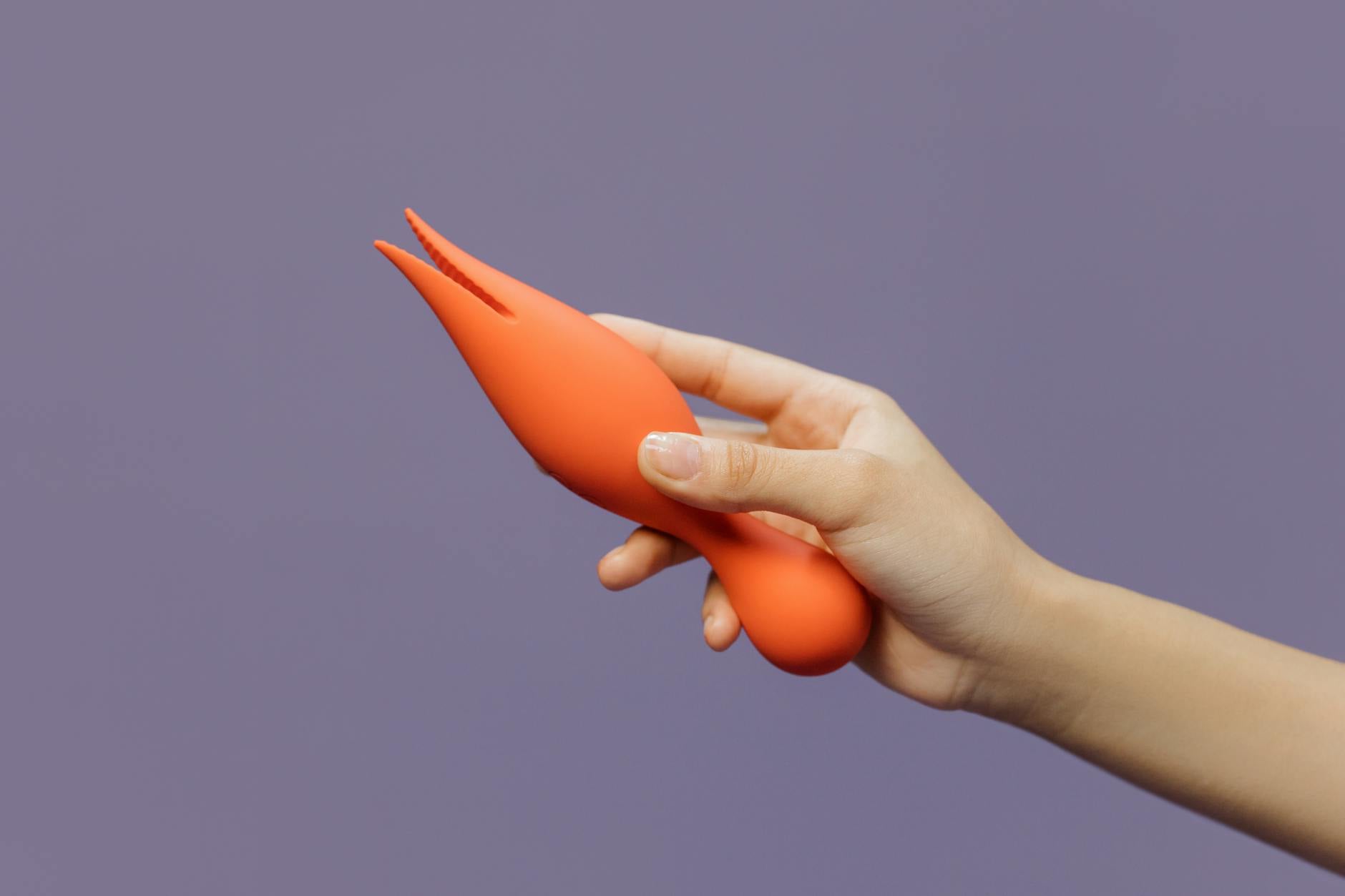
Photo by Diana ✨ on Pexels
Start lower than you think you need to
If you're used to patterns 5 or 6 on your lem vibrator alone, try pattern 1 or 2 with a new partner present. This feels counterintuitive. You might worry it won't be enough. Usually it is, because your nervous system is already delivering stimulation through presence and newness.
The goal isn't to reach the same intensity you hit solo. The goal is to find the sweet spot where the vibration enhances what's already happening, rather than competing with the sensory load you're already managing. You can always increase. You can't un-feel overstimulation.
Communication is a sensation tool
Tell your partner specifically what you need: "I want to start really gentle because my nervous system is a bit activated right now, and I respond better to building slowly." This isn't asking for less. It's showing them where real pleasure happens for you.
Then actually use the lemon vibrator together. Let them watch, ask them questions ("Does this look good to you?" "Can you see where I'm guiding it?"), and give real-time feedback. "That pattern feels like too much right now" or "I like this one better" isn't rejection. It's intimacy.
Many new partners are relieved to have direction. They're also managing their own nervous system activation. Telling them exactly what helps you rewires the interaction from "Will this be okay?" to "We're figuring this out together."
Build duration before you build intensity
This is counterintuitive but reliable. Instead of jumping to higher patterns quickly, stay at pattern 1 or 2 for longer. Spend 10 to 15 minutes in a lower intensity. Your nervous system calms. Your clitoris adjusts. Sensation becomes familiar rather than startling.
Then, if you want more intensity, increase by one pattern level. Stay there another 5 to 10 minutes. The total session might reach pattern 4, but you got there gradually, not in a jump. Pleasure built over time registers differently in your body than intensity that appears suddenly.
Create a physical boundary that helps
Your partner doesn't need to be watching directly. Try using a lemon clitoral vibrator under a blanket or with your legs together. This creates a gentle sensory boundary. You can feel them near you without their visual focus adding another layer of stimulation. Some people find this reduces the overwhelm significantly.
Alternatively, have them touch you in a different way while you use the vibrator. Their hand on your back, their arm around you, their mouth on your neck. This gives your nervous system multiple safe anchors instead of one focal point of attention.
The pattern that works for new relationships
Many people find that alternating patterns works better than staying in one. Try pattern 1 for 30 seconds, pattern 2 for 30 seconds, back to pattern 1. The variation gives your nervous system micro-breaks. It also builds arousal in layers instead of one straight climb.
Or use pattern 1 solo for a few minutes, then increase only when your partner touches you in a specific way. This ties intensity to intimacy rather than just sensation. Your brain links the vibration to connection, which makes the whole experience feel less like overstimulation and more like shared presence.
What happens over time
In week one or two of a new relationship, you might genuinely need pattern 1 to feel good. By week four or five, as your nervous system settles and trust deepens, you'll probably be able to access higher intensities without overwhelm. This isn't about your clitoris becoming less sensitive. It's about your whole system learning that this new person is safe.
Don't rush it. The couples I work with who slow down in early stages actually reach more interesting places faster than those who push through discomfort trying to seem relaxed. Your body knows what it needs. Listen to it.
When to know you've found your baseline
You've calibrated right when you feel arousal building without that tight, overstimulated feeling. You should be able to smile, make eye contact, and stay present instead of managing sensation. You might even want more, which is information worth noticing.
If you're white-knuckling through sessions or feeling relieved when they're over, something's still too intense. Back off one pattern level and stay there for another week. There's no prize for suffering through sensation.
The role of communication after
After sex, tell your partner what worked. "I liked the slower build" or "That pattern on repeat felt best for me." This data matters. New partners learn quickly if you teach them. Most people would rather have specific feedback than vague compliments.
You might also notice that as you use a lemon vibrator together more, your body's baseline shifts. A sensation that felt overwhelming in week two might feel just right by week six. This is normal neural adaptation. Your clitoris isn't changing. Your nervous system is integrating new safety.
Let that happen at its own pace. The pleasure you're building now is built on trust and self-knowledge. That's the kind that actually sustains.
People also ask
Can you be overly sensitive to lemon vibrators in a new relationship?
Not overly. What feels like oversensitivity is usually your nervous system in activation mode. New relationship energy is real arousal, which means your body is already stimulated before the vibrator arrives. Adding intense sensation on top of that can feel like too much. It's a systems issue, not a sensitivity issue. Lowering intensity and building duration typically resolves it within a few weeks as your nervous system calibrates to the new person.
Should you hide that a lemon vibrator feels too intense right now?
Absolutely not. Telling your partner "This is intense for me in a good way, let's go slower" is actually sexier than pretending comfort you don't feel. Partners who care about your pleasure want this information. It makes them feel more connected and more confident. Hiding discomfort makes both of you less present.
Does using lemon clitoral vibrators with a partner always feel different than solo?
Yes. The presence of another person, even if they're just nearby, changes your nervous system state. This isn't bad. It's just information. Some people find partnered vibrator use eventually becomes their favorite once the nervous system settles. Others prefer solo use and partnered sex without a vibrator. Both are fine. You're figuring out your actual preferences, not your supposed preferences.
How long does it usually take before sensation feels normal with a new partner?
Usually four to six weeks if you're using lemon vibrators regularly together and communicating about what works. Some people settle faster. Others take longer, and that's okay. The timeline depends on how much relationship anxiety you carry, how quickly you tend to trust, and how much you've explored your own pleasure solo. There's no standard speed.
Can your partner help reduce overwhelm while you're using a lemon sucker or vibrator?
Yes. Grounding touch, like their hand on your back or thigh, can actually decrease overstimulation. So can slowed breathing together or them narrating what they see ("You look beautiful, I love watching you like this") in a calm voice. These aren't distractions. They're nervous system regulation tools. Your partner's calm presence teaches your body that this is safe.
What if sensation still feels overwhelming after several weeks?
Then there might be something else happening. How to use lemon vibrators when arousal feels disconnected from your body after dissociation covers situations where overwhelm is about disconnection rather than new relationship activation. You might also explore whether the relationship itself is creating anxiety that your body is expressing through sensation sensitivity. Sometimes the issue isn't the lemon clitoral vibrator. It's something the vibrator is revealing.
The point
New relationships change how your body responds to everything, including lemon vibrators. This is temporary and manageable. Starting lower, building slower, and staying in communication doesn't mean you're less sexual or less into your partner. It means you're building pleasure on a foundation of nervous system safety, which is actually where the good stuff lives. Give yourself that gift.
If you want to explore how to build confidence around your own pleasure independent of a partner, how to use lemon clitoral vibrators when solo pleasure feels awkward or unfamiliar is worth reading. And if the new relationship itself is carrying anxiety that's affecting your body's response, how to use lemon vibrators when clitoral arousal feels disconnected from emotional intimacy might offer perspective. Your pleasure deserves attention. Your nervous system deserves care. Both can happen here.
Questions about your specific situation? Reach out. We're here for this.