Let's name what's happening
Dissociation during sex is a specific kind of cruelty. Your body is there. Your partner might be there. But your mind has left the building, and with it goes any sense that pleasure is even possible. You're watching the scene from above, or you feel numb, or time gets weird. The disconnect isn't a choice and it isn't about not caring enough. It's a survival mechanism that once protected you and now, frustratingly, gets in the way.
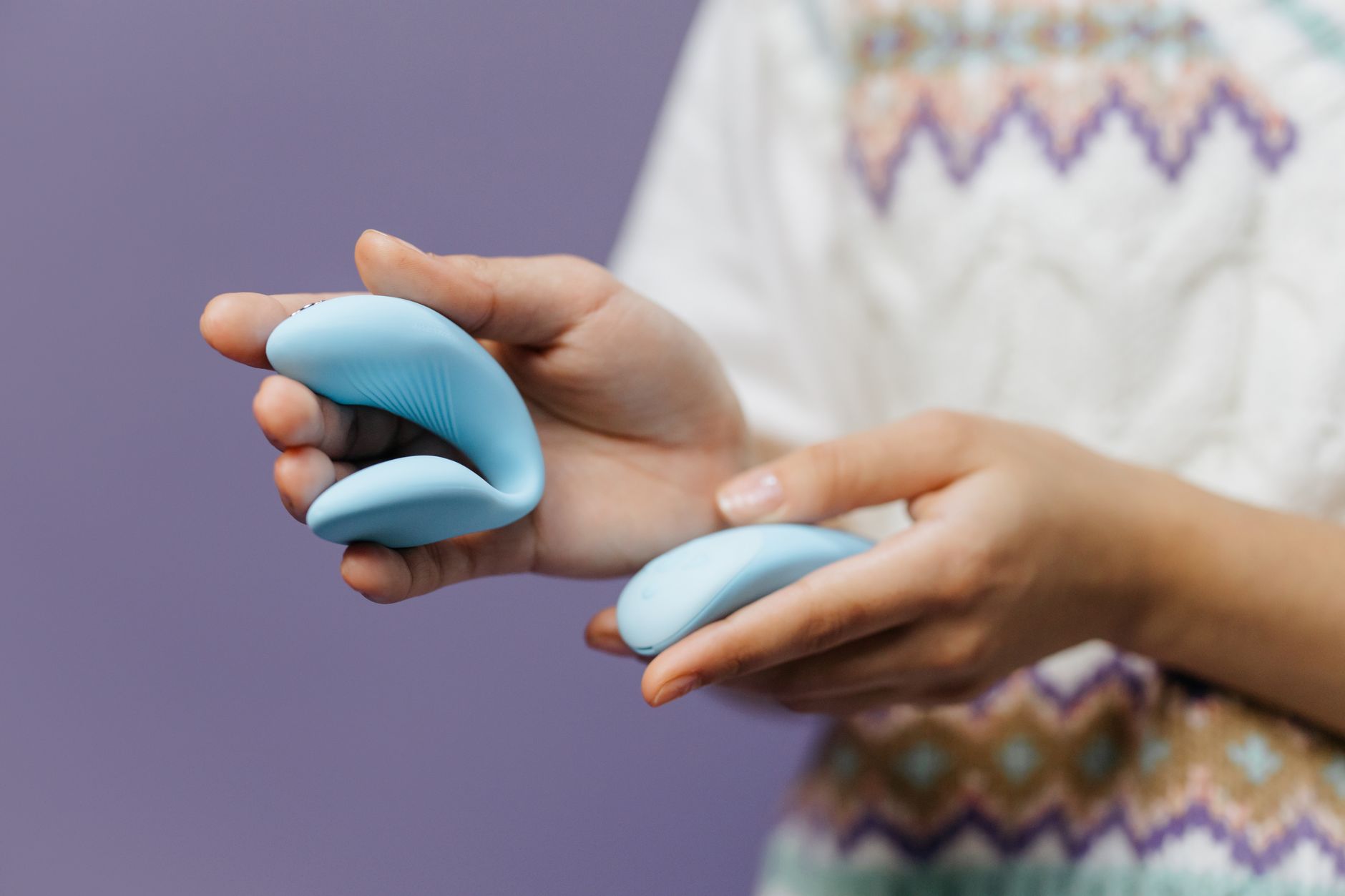
The good news: lemon clitoral vibrators like the Lem are specifically useful here because they work differently than your hands or a partner's touch. They give you something concrete to focus on. They create a physical anchor.
Why dissociation kills arousal connection
Dissociation is your nervous system's way of saying "this is too much, I'm stepping out." During intimacy, it can trigger for a hundred reasons: old trauma, current stress, feeling unsafe even when you're actually safe, or just the accumulated weight of being in your own body.
When you're dissociated, arousal signals get lost in the static. Your clitoris might respond physically, but psychologically you're not there to feel it. The sensation either doesn't register or feels like it's happening to someone else. This is not a sign of low libido or broken wiring. It's your nervous system protecting itself using the only tool it knows.
The problem is that once dissociation becomes a pattern during sex, the anticipation of spacing out can actually trigger more spacing out. You start to expect it, which creates a feedback loop. This is where most people get stuck.
The role of lemon vibrators in grounding
Here's what makes lemon clitoral vibrators different from fingers or other toys for dissociation specifically. They create a distinct, consistent, external stimulus that your brain can't ignore. The suction pulses from a tool like the Lem give your nervous system something novel and rhythmic to track.
When you're dissociated, your interoception is offline. That means your ability to sense what's happening inside your own body is dampened. An external vibrator bypasses that problem. It doesn't rely on your internal awareness. It delivers sensation directly.
Additionally, because you're controlling the intensity and rhythm yourself, you maintain agency. That matters enormously when dissociation is tied to feeling powerless.
Starting with the grounding first
Before you even touch a lemon vibrator, the work is in your nervous system. If you're dissociated, jumping straight to pleasure isn't going to work. Your brain isn't online yet.
Start with a grounding practice. This doesn't have to be spiritual or complicated. The 5-4-3-2-1 technique works: name five things you see, four things you can touch, three things you hear, two things you smell, one thing you taste. Do this fully clothed, preferably not in a sexual context at first. Practice it daily for a week.
Once grounding feels natural, practice it during lower-stakes touch. If you have a partner, have them hold your hand while you ground. Get used to being touched while your mind stays present. This is the foundation.
Only after grounding is a skill you own should you introduce lemon vibrators or any other toy.
How to use the Lem when dissociation is part of your pattern
First session: solo exploration in a safe, boring room. No music, no candles, no pressure to get aroused. You're not trying to feel pleasure yet. You're trying to feel present.
Start clothed or with underwear on. Turn on the Lem at pattern 1 or 2, the gentlest setting. Press it against your outer thigh or your lower belly, not your clitoris. What you're doing is acclimating to the sensation without the intensity of direct clitoral contact. Notice what it feels like. Name it: "I feel vibration. I'm in this room. I'm holding this toy."
Do this for two minutes. Then stop. Don't push for arousal. The goal is: "I noticed a sensation and stayed present for it."
Second session, repeat the same thing but this time on your vulva over your underwear. Same low settings. Same short duration. Same goal: presence, not pleasure.
By the third or fourth session, if you're still present, you can try direct contact on low settings. If dissociation starts to creep in, stop immediately. Don't fight it. Just notice: "My mind is leaving. I'm stopping now." Stopping is not failure. Stopping is you taking care of yourself.
Building tolerance for sensation
Dissociation thrives in numbness and disconnection. As you practice staying present during low-level vibration, your nervous system slowly starts to trust that sensation isn't dangerous. That's the actual work happening.
You might notice that after a few sessions of the Lem on low settings, your baseline sensitivity increases. Things feel less numb. This is your interoception coming back online. Don't skip ahead to high intensities because you feel better. That's a classic trap. Slow builds are what rewire your nervous system.
If you have a partner, they should know roughly what you're working on. Not graphic details. Just: "I'm learning to stay present with sensation. I'll let you know when I'm ready to try this together." Then actually do the work solo first. You can't ground through another person's presence yet. That comes later, after you've proven to yourself that it's possible.
What to do if dissociation still happens
You will probably have moments where you zone out even with the Lem. That doesn't mean it's not working. It means your nervous system is still in the habit.
When you notice the spacing out, pause. Don't shame yourself. Don't get frustrated. Just pause. Ground again using the 5-4-3-2-1 technique. Then decide: do I want to try again, or am I done for today? Either answer is fine.
Over weeks, the frequency of dissociation episodes during solo pleasure with the Lem should decrease. You're building evidence in your own nervous system that you can feel sensations and stay present. This is slow work, but it's real work.
Adding a partner back in
Once you can use lemon clitoral vibrators solo without regularly dissociating, partnered touch becomes less threatening. Your nervous system has proof that sensation and presence can coexist.
If you reintroduce a partner, the Lem becomes even more useful because it's yours. You control the intensity. You control the rhythm. Your partner can touch you elsewhere while you use the toy, which creates a layered sensation that actually helps stay present (your brain has multiple inputs to track).
Talk about this in advance. "I want to try using the Lem while you touch me because it helps me stay grounded." Make it clinical if that feels safer. This is a tool, like a seat belt. It's not a sign that your relationship is broken. It's a sign that you're being strategic about your own nervous system.
When to seek additional support
If dissociation is severe or ongoing across all situations, not just during sex, you might benefit from trauma-informed therapy or somatic work alongside pleasure-based exploration. A therapist trained in nervous system regulation can help you understand what your brain is protecting you from and whether you need additional tools.
Lemon vibrators are helpful for reconnection, but they're not therapy. They're a tool that works best when your nervous system is also getting support elsewhere.
FAQ
Can dissociation during sex be healed permanently?
Most people see significant improvement with consistent grounding practice and patience. Whether it's permanent depends on the root cause, but the pattern can absolutely break. You don't have to white-knuckle through every encounter.
How long does it take to feel present again?
This varies wildly. Some people notice shifts in two weeks of daily practice. Others take months. What matters is consistency, not speed. Showing up for grounding work even when you don't see immediate results is what rewires your nervous system.
Is using a lemon vibrator instead of a partner's touch a problem?
No. It's actually smart boundary-setting. You're working on your own nervous system before bringing another person into the equation. That's not avoidance, that's strategy.
What if lemon vibrators trigger dissociation too?
Then you scale back to even gentler input, or you work with a therapist first before reintroducing vibration. The goal is always to build evidence that sensation equals safety, not to push through discomfort.
Can I use the Lem while grounding at the same time?
Absolutely. You might use a modified version: you're noticing five things you see while the Lem is on low, then pausing, then continuing. Multi-tasking the grounding and the vibration together builds even stronger nervous system associations.
Should my partner know about my dissociation?
Yes, eventually. Not necessarily every technical detail, but the fact that your nervous system sometimes checks out during sex is information they need. A partner worth keeping will want to understand and help.
The path back to your body
Dissociation makes you feel like a ghost in your own experience. Lemon vibrators, paired with grounding work and patience, help you become solid again. Your pleasure isn't gone. It's just waiting on the other side of presence, and you have tools to get there.
If you're ready to start, reach out. We have resources at The Lemon Intimacy that can help you move forward.