
Let's clear up the biggest myth first
Spontaneous desire—the kind that hits out of nowhere—is not how most bodies work. And if you've been waiting around for that lightning-bolt feeling your whole life, you've been sold a very specific, very limiting story about how arousal should happen.
Responsive desire is the norm. It's where arousal builds in response to touch, attention, or intentional focus. Most women, and a significant portion of men and non-binary folks, live here. For years, this was pathologized as a problem. It isn't. It's just how your nervous system is wired.
The real problem: we've built sexual culture around spontaneous desire, which leaves responsive desire people feeling broken, lazy, or uninterested. You're none of those things. You just need a different approach to pleasure.
Why responsive desire gets misunderstood
Here's what happens in a responsive desire system. Your partner initiates. Nothing happens. No spark. No immediate surge of sensation. So you assume you're not in the mood, and you stop. Case closed.
But what you didn't do is give your body time to catch up.
Responsive desire has a lag. It requires sustained attention—touch, mental focus, sometimes deliberate action—before the cascade of sensation builds. A five-minute window isn't enough. Fifteen to twenty minutes is more realistic. During that time, your nervous system gradually shifts. Blood flow increases. Neural pathways activate. Sensation becomes possible.
The problem with a partner initiating alone is that they can't generate arousal in your body. They can create conditions for it, but you have to meet them halfway. And when that halfway point takes a while, many people bail.
This is where lemon adult toys change everything.
The autonomy piece matters
When you're using a lemon clitoral vibrator on your own terms—at your own pace, with no pressure to "perform" responsiveness for someone else—the dynamics shift completely.
You're not waiting for someone to touch you the right way. You're not performing enthusiasm you don't feel yet. You're not negotiating your timeline against another person's expectations. You're setting the conditions for your own arousal intentionally.
This matters because responsive desire often comes tangled up with performance anxiety. If you're worried that you're taking too long, or that your partner is losing interest, or that you "should" be ready by now, your nervous system stays in a semi-vigilant state. You can't relax into the build.
When you're alone with a tool designed to target exactly where you need stimulation, that pressure dissolves. You can focus on sensation instead of managing someone else's feelings.
How to use a lemon vibrator when responsive desire is your baseline
Start with a real plan, not a vague hope. Block fifteen to twenty minutes. Not as a chore, but as genuine time carved out for yourself. Light a candle, lock the door, whatever helps you feel like this is legitimate self-care and not something you're squeezing in around laundry.
Warm up without the toy first. Five minutes of touch on your breasts, neck, inner thighs. Nothing penetrative. Just sensation. You're not trying to get aroused. You're simply inviting your body to start paying attention.
Introduce the lemon vibrator at a lower setting. The Lem works brilliantly for responsive desire because the air-suction technology doesn't require the same level of existing sensation that traditional vibration does. It builds stimulation gradually instead of hitting hard from the start. Start at pattern one or two. Let your body register what's happening.
Give it time. This is the critical part. Many people report that responsive arousal doesn't fully hit until they've been engaging for ten to fifteen minutes. Your clitoral tissue needs time to engorge. Neural pathways need time to activate. If you stop after five minutes because nothing is happening, you're quitting right before the shift.
Adjust intensity as you go. Once sensation is building, you can move up to patterns three or four. But the key is that you're moving up in response to what your body is already experiencing, not jumping straight there.
The partner piece: how to talk about this
If you have a partner, responsive desire doesn't mean they're off the hook. It means the work looks different.
Many responsive desire people find that when their partner initiates with intention—actual touch, not just expectation—they can meet that with their own arousal. But it takes a few things being true.
First, they need to know it takes you time. Not as an apology or an explanation, but as information. "My arousal builds more slowly than you might expect. That's not about you or how much I want this. It's just how my body works."
Second, your partner needs to be willing to provide sustained, focused attention without needing immediate payoff. This is harder than it sounds. A lot of people are trained to interpret their partner's delayed response as rejection.
Third, and this is important: you might find that using a lemon clitoral vibrator alone, on your own timeline, actually makes partnered sex better. Here's why. When you understand your own arousal pattern, when you've built sensation successfully by yourself, you know what works. You can communicate that to a partner. You can guide them. You can build an entire interaction around that knowledge instead of expecting them to magically know how to unlock something even you don't fully understand yet.
When responsive desire shifts
Responsive desire isn't fixed. It changes across your menstrual cycle, with stress levels, with relationship changes, sometimes with medication. And here's what's important: that's completely normal. A person can be spontaneously motivated sometimes and responsive other times. Both are real. Both are valid.
If you find yourself suddenly more interested in spontaneous desire, that's worth noticing and maybe exploring. If you swing the other direction and become more responsive, same deal. The point is to stop fighting your actual wiring and start working with it.
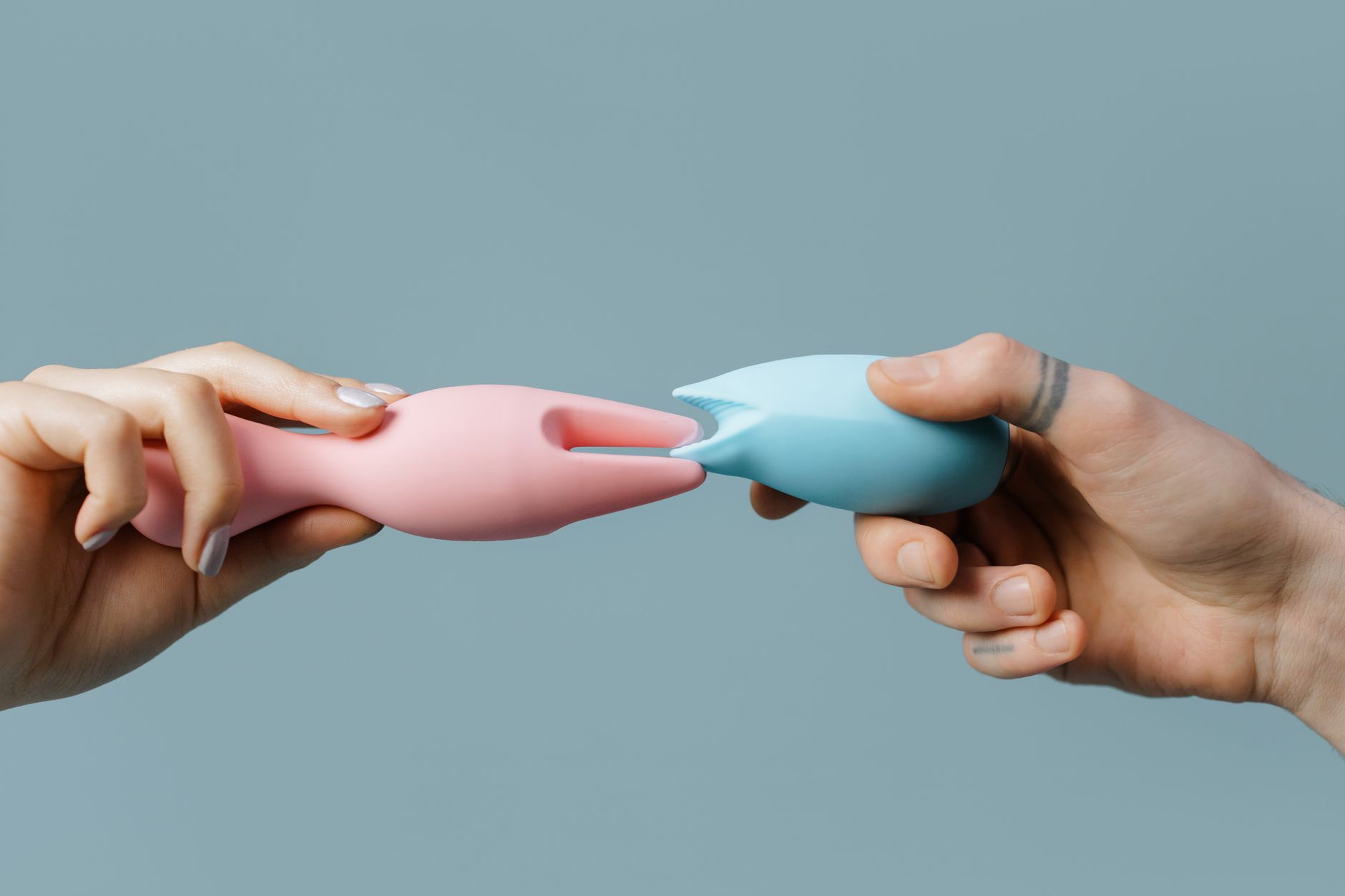
Photo by cottonbro studio on Pexels
Lemon vibrators—especially air-suction technology like the Lem—are built for this. They don't require you to already be aroused to work effectively. They build sensation from a baseline. That's the magic of responsive desire tools. They're not fighting your biology. They're meeting it halfway.
Responsive desire and long-term relationships
One thing I see consistently in couples therapy is that responsive desire becomes a bigger issue the longer people are together. Early on, novelty and uncertainty can override it. But after years, when a partner is familiar, when daily life is routine, responsive desire really shows up. And couples often interpret that shift as a sign the relationship is dying.
It's not. It's just the inevitable move from spontaneous to responsive in a long-term partnership. Understanding that difference changes everything.
When both partners understand that responsive desire is normal—that it's not a lack of love or attraction, just a shift in how arousal works over time—they can adjust expectations accordingly. And tools like lemon adult toys become not a Band-Aid for a broken system, but a legitimate part of how two people maintain intimacy when the old shortcuts stop working.
You might also find that learning about your own responsive arousal helps you understand other areas of your partner's desire too. Responsive desire isn't just sexual. People with responsive desire often have responsive motivation to everything. They warm up to ideas once they're engaged with them. They're not lazy. They just don't ignite from a cold start.
The shift from guilt to agency
Here's what I want to land on. For years, you might have felt guilty about your responsive desire. Like you were letting a partner down. Like you were broken. Like you should be able to just flip a switch and want sex right now.
You can't. And you shouldn't try.
What you can do is take ownership of your own arousal. Use tools that work for your body. Carve out real time and attention for pleasure. Communicate clearly with partners about how you're wired. And stop apologizing for the fact that your desire responds to conditions instead of appearing spontaneously.
Responsive desire isn't less. It's just different. And once you stop fighting it and start designing your sexual life around it, pleasure becomes not something you hope happens, but something you build intentionally.
FAQ: Responsive desire and pleasure
How long does responsive desire usually take to build?
For most people, responsive arousal takes fifteen to twenty minutes of sustained stimulation or attention. This varies wildly based on stress, hormones, how connected you feel to your partner, and whether you're mentally present. If you're distracted or anxious, it takes longer. If you're relaxed and focused, sometimes it's faster. The key is to stop watching the clock and give yourself permission to take whatever time you need.
Can responsive desire turn into spontaneous desire?
Absolutely. Many people find that as they age, or when they're very relaxed, or in new relationships, desire shifts toward spontaneous. Others cycle between both. It's not fixed. But trying to force yourself into spontaneous when your baseline is responsive is like trying to make yourself left-handed when you're right-handed. You can learn to do it, but it's exhausting and unnecessary. Work with your actual wiring.
Does using lemon vibrators make responsive desire worse or better?
Using tools to build arousal intentionally can actually deepen your understanding of responsive desire. You learn what patterns work for you. You understand your own timeline. That information makes partnered sex better, not worse. The only risk is if a toy becomes a replacement for communication with a partner, but that's a relationship issue, not a toy issue.
Is responsive desire the same as low libido?
No. Responsive desire is how arousal gets triggered. Low libido is the overall level of sexual interest. Someone with responsive desire can have high libido. They just need the right conditions to access it. Conversely, someone with spontaneous desire can have low libido. They just struggle less with the ignition process. Don't conflate the two.
What if my partner has spontaneous desire and I have responsive desire?
This is one of the most common mismatches in relationships. The person with spontaneous desire feels rejected. The responsive partner feels pressured. What helps: understanding that this isn't a mismatch of love, just a mismatch of how bodies work. Many couples find that the responsive partner doing some solo work—with a toy, with fantasy, with focused attention—before the partner initiates can bridge the gap. It's not that you're broken. It's that you have different ignition systems.
If I need a vibrator to get aroused, does that mean I'm dependent on it?
No more than you'd be dependent on foreplay, or a specific location, or music. Responsive desire people need conditions. Lemon clitoral vibrators are one of many conditions that help. Some people also need mental focus, comfort, or their partner's touch. Tools aren't addictive. They're responsive to a biological reality. Use them the way you use any other element of pleasure: as needed, without guilt.
You don't have to feel broken
One last thing. If you've spent years thinking your responsive desire was a flaw in you or your relationship, I want you to know that's not true. Responsive desire is incredibly common. It's documented in research across sexual health and relationship science. It's not pathological. It's not unusual. It's how a lot of people actually work.
The break isn't in you. It's in the gap between how pleasure is culturally described and how your body actually operates.
Closing that gap—through better information, better tools, and better communication—is what changes everything.
If you want to explore this more deeply, consider reading about how responsive desire shows up in long-term relationships, or how it intersects with other factors like stress and body image. And if you're navigating this with a partner, having a real conversation about timelines and expectations can be game-changing.
You're not broken. You're responsive. And that's powerful once you stop treating it like a problem to solve.