Let's be real. Grief doesn't just break your heart. It locks your whole nervous system. Pleasure feels like a betrayal. Touch feels numb. Orgasm feels impossible, even laughable. Some of my clients say it feels like their body went to sleep without asking permission.
The thing nobody tells you is that this is exactly how grief works physiologically. Your nervous system has shifted into protection mode. Pleasure pathways literally downregulate. It's not a moral failing or a sign that you're broken. It's your brain trying to survive.
But here's what matters: pleasure can come back. And clitoral vibrators like those from The Lemon Intimacy can be a surprisingly gentle bridge to get there. Not a cure. Not a shortcut through grief. A bridge.
When we lose someone or something meaningful, the brain floods with cortisol and adrenaline. Your body is in threat-detection mode. Resources that usually go to things like arousal, sensation, and pleasure get redirected to survival tasks. Your nervous system doesn't have bandwidth for joy.
More specifically, the prefrontal cortex (the part that processes pleasure and emotional complexity) goes offline. The amygdala (fear and pain center) runs the show. Anything that used to feel good can feel hollow, pointless, or even guilty.
Physically, numbing happens too. The vagus nerve, which is central to arousal and sensation, tightens. Pelvic floor tension increases as part of a protective freeze response. Blood flow to the vulva decreases. The result is a body that literally cannot feel much, even if you wanted it to.
This isn't permanent. But it also isn't fast. Forcing pleasure, rushing it, or shaming yourself for the numbness only makes the nervous system tighter.
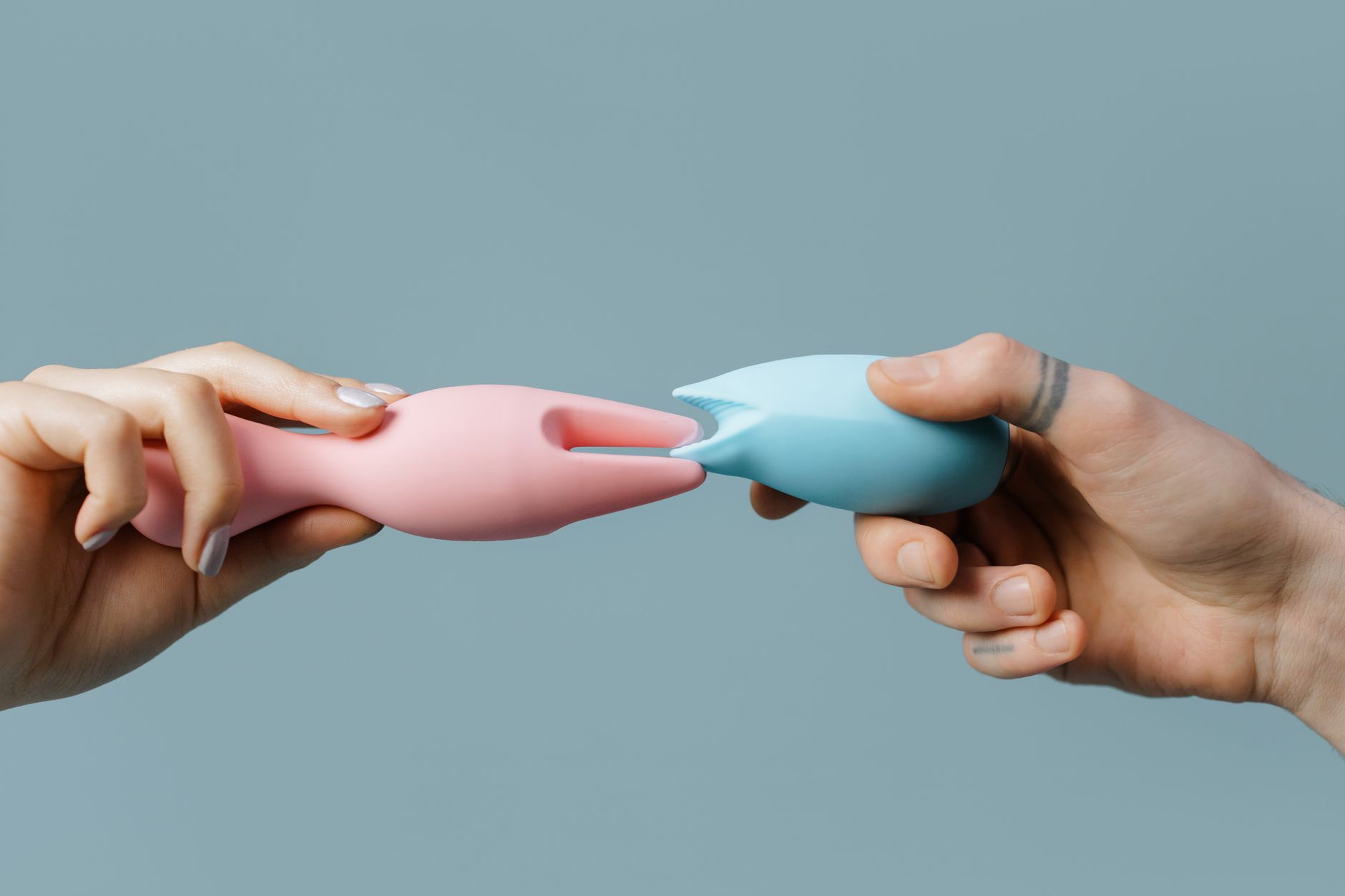
Lemon vibrators like the Lem work differently than penetration or finger stimulation. They use suction and pulsation rather than friction. That distinction matters after grief because your nervous system needs permission to come back online slowly.
Here's what makes them specifically helpful:
1. They require zero pressure from you. When pleasure feels absent, the worst thing you can do is perform for it or force yourself to "get there." Vibrators do the work. You just have to show up and notice.
2. They wake up sensation without overwhelming it. The Lem's gentlest patterns activate the thousands of nerve endings in your clitoris at a predictable, manageable intensity. You're not forcing a response. You're inviting one.
3. They give you something to focus on besides the grief itself. This sounds simple, but it's crucial. In those first weeks or months after loss, your mind runs laps on the pain. A vibrator gives your nervous system a different input to track. Neutral. Physical. Not emotionally loaded.
4. They're private and repeatable. You can restart this process as many times as you need without explaining to anyone. That freedom matters.
The temptation is to jump straight to the Lem on medium settings and expect fireworks. That won't work. Your body isn't ready yet. Here's the gentler approach.
Week one: sensory permission, nothing else.
Take the vibrator out and hold it. Don't use it yet. Just touch it, feel the weight, the texture. This sounds silly, but you're literally reminding your nervous system that sensation exists. You're creating a tiny, safe experience with pleasure-adjacent objects. Some days that's enough.
Week two: pattern one only.
The Lem's pattern 1 is the gentlest setting. Use it on your inner wrists, your neck, your forearms first. Not your clitoris. You're teaching your nervous system that vibration equals safety, not demand. This can take days or weeks. Don't rush.
Week three and beyond: clitoral introduction.
Once your body recognizes vibration as non-threatening, you can move to your clitoris. Start with pattern 1 at 30-second intervals. Fifteen seconds on, thirty seconds off. You're not chasing orgasm. You're gathering data: Does this feel like anything? Does the sensation change minute to minute? Is there any shift in numbness, even tiny?
Many of my clients report that the first feeling they get back isn't pleasure. It's neutrality. A lack of pain. That's the win. That's the bridge.
Don't be surprised if pleasure comes back and then vanishes. Or if you feel arousal and then guilt about feeling aroused while grieving. Or if you start to feel your body wake up and then have a crying session halfway through. This is all normal.
Grief isn't linear. Your pleasure won't be either. The clitoral vibrator becomes a tool for noticing what's happening in real time, not a way to bypass what you're feeling. If you feel sadness during solo play, that's data. That's your nervous system processing. Not failure.
If you have a partner, the numbing after grief can create distance exactly when you both need closeness most. Your partner might feel rejected. You might feel guilty for not feeling what you "should."
The best conversation to have is honest: "My nervous system is stuck in grief. That's about my body, not about you. I'm going to try some things solo to help my nervous system reset. This is me trying to come back to myself and to us."
Solo pleasure is actually the bridge back to partnered pleasure. Once your nervous system remembers what sensation feels like through the Lem, you can bring that information back to your partner. Not as pressure. As possibility.
If you do want to involve them eventually, ask them to join you without expectation of orgasm. Just presence. This is less about sex and more about your partner witnessing your nervous system learning to feel safe again.
If three months in you still feel completely flat, or if pleasure was never really there even before the grief, that's worth talking to a therapist about. Some loss triggers clinical depression. Some people have had chronic numbness their whole lives. The vibrator won't fix those. But a trained therapist can.
Using lemon vibrators after grief isn't really about the vibrator. It's about slowly, gently, repeatedly telling your nervous system: "It's safe to feel. It's safe to want. You can come back now."
That message needs to be sent many times. Your body doesn't believe it immediately. But with consistent, gentle practice, something shifts. Sensation returns. Numbness lifts. And sometimes, very quietly, pleasure comes back too.
This isn't about rushing back to normal. There is no normal after significant loss. But there is a version of you that can feel alive again. That version exists in your body right now. It's just waiting for permission.
Is it normal to feel nothing during solo play after grief?
Completely normal. Grief numbs your entire nervous system, including pleasure pathways. Sensation doesn't come back on a schedule. Some people feel a slight shift in weeks. Others take months. The key is consistency without pressure. Show up, use the vibrator the same way each time, and notice what changes without expecting anything specific.
Can using a vibrator make me feel guilty if I'm grieving?
It can, and that's worth naming directly. Pleasure can feel like betrayal after loss. But pleasure is also a sign that you're healing. Your nervous system is finding its way back online. That's not disrespectful to the person you've lost. It's honoring your own right to feel alive.
How long before pleasure comes back completely?
There's no timeline. Grief is deeply personal. Some people feel shifts in sensation within a few weeks of gentle vibrator use. Others take months or years to fully reconnect to pleasure. The path isn't linear. You might feel arousal one day and complete numbness the next. Both are part of the process.
Should I tell my partner I'm using a vibrator to help with grief?
That depends on your relationship and what feels true for you. If you have a partner you trust, honesty is usually the best path. You might say something like: "My nervous system is having trouble feeling pleasure right now because of what's happened. I'm using a vibrator to help my body remember how to respond. This isn't about rejection. It's about me healing so I can show up in our relationship again."
What if I never feel pleasure the same way again?
Grief often changes us permanently. You might not return to the exact pleasure you felt before. But you can find a new relationship to pleasure that's informed by what you've experienced. Many of my clients report that pleasure after grief feels deeper, more intentional, and more appreciated. Different isn't worse. It's often richer.
Can I use the Lem if I also have depression or anxiety?
Yes, though you might need to adjust your expectations. When anxiety about pleasure blocks arousal, the vibrator works best as part of a larger nervous system reset that might include therapy, movement, or medication adjustments. The vibrator is a tool, not a cure. It works best in combination with other support.
Grief is one of the most underestimated nervous system events we can experience. Your body isn't broken. It's protecting you. And when you're ready, clitoral vibrators from The Lemon Intimacy like the Lem can be a gentle, patient way to help that protection slowly lift and pleasure find its way back in. If you have questions about how to use these tools alongside other healing practices, we're here to help. Reach out at /contact.