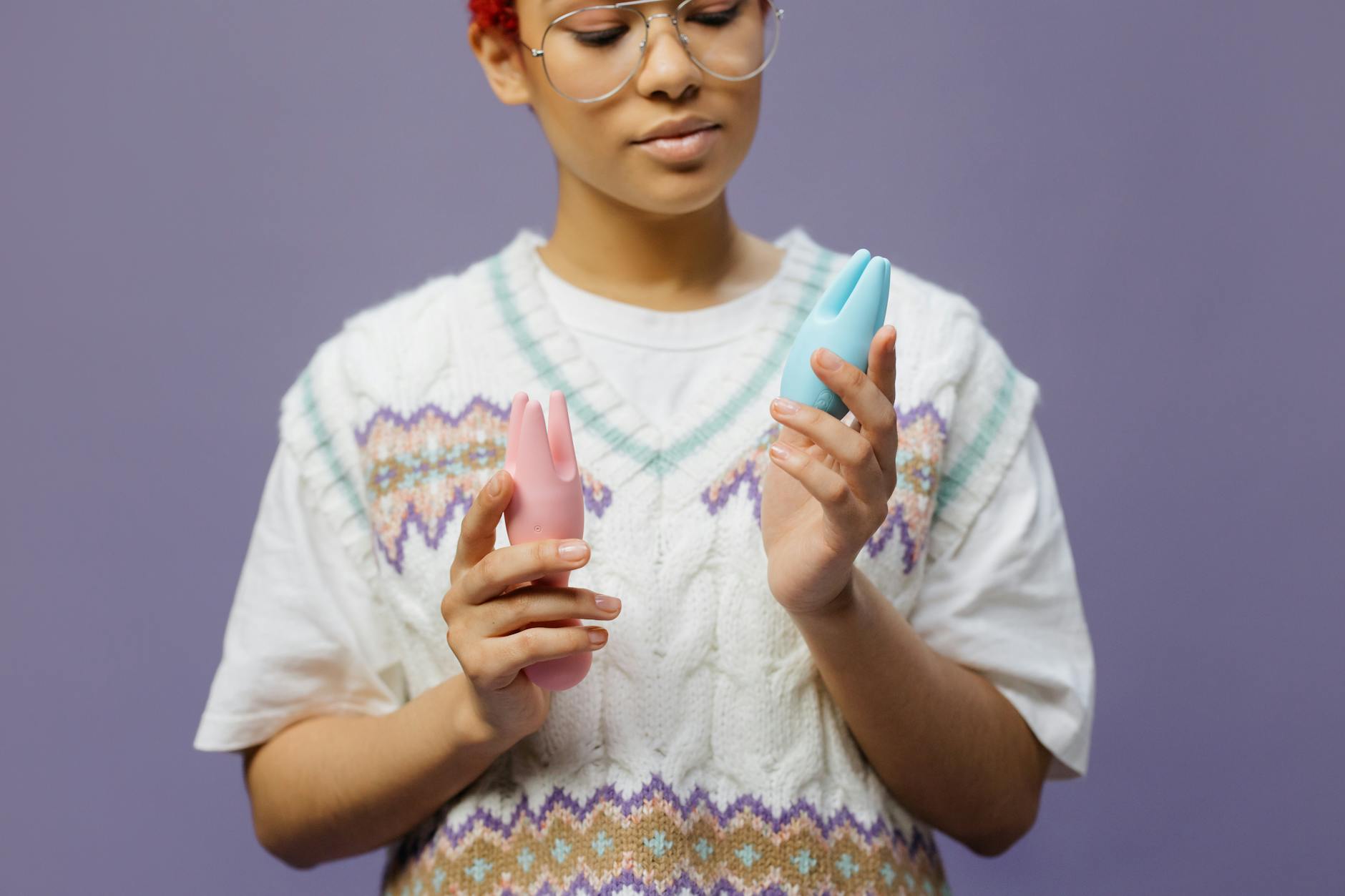
Honestly though, this is one of the most common friction points I see in couples therapy. One person's body requires a slow build. The other wants to move things along. Neither is wrong. Both are frustrated.
Here's the thing: a lemon clitoral vibrator isn't a workaround for that mismatch. It's a solution that respects both timelines without anyone feeling rushed or abandoned.
Physiologically, arousal doesn't happen at the same pace for everyone. Research shows that people with vulvas typically need 20 to 30 minutes of consistent stimulation to reach full arousal. People with penises often get there in 3 to 5 minutes. That's not a judgment. It's biology.
But here's what complicates it: when one partner is ready and the other isn't, the slower partner often feels pressured. That pressure kills arousal even faster. Meanwhile, the faster partner feels rejected. The sex becomes transactional instead of connected.
A lemon sucker or clitoral vibrator changes the dynamic because it accelerates your arousal timeline without anyone having to slow down or compromise.
Air-suction vibrators like the lemon clitoral vibrator work differently than traditional vibrators. Instead of surface vibration, they create rhythmic suction that stimulates a wider nerve cluster around the clitoris. This triggers arousal faster and more consistently.
In practical terms: you might normally need 25 minutes of manual stimulation to feel fully aroused. With a lemon vibrator, you might get there in 10 to 12 minutes. That doesn't mean rushing. It means your body is responding more efficiently to the right type of stimulation.
The second part is equally important. Because suction feels different from friction, it often wakes up sensation that manual touch alone might miss. Your body gets more engaged faster.
Before you introduce a clitoral vibrator into the quickie scenario, you and your partner need a five-minute conversation. Not a heavy one. Just honest.
Say something like: "I love sex with you. My body just needs more warm-up time. I want to find a way we both feel good in the time we have. I've been thinking about trying a lemon vibrator because I think it might help me get there faster without either of us feeling pressured."
The frame matters. You're not saying, "I need this because you're not enough." You're saying, "I want to meet you halfway, and this tool helps me get there."
Many partners are relieved. They want you to enjoy sex too. They just didn't know how to bridge the gap without the encounter feeling clinical.
Starting foreplay before they start foreplay is key. Begin with your lem vibrator about 5 minutes before the physical touch happens. This might mean taking a few minutes alone in the bedroom, or bringing it into the moment together.
If you're together, use it while they're kissing you or touching you elsewhere. The combination of mouth and suction tends to accelerate arousal significantly. You're getting multiple types of stimulation at once, which the nervous system responds to faster.
Most lemon vibrators have a lower setting that's perfect for this. You're not going for the big finish. You're priming the system. Think of it as moving your body from 0 to 6 or 7 out of 10 arousal before penetration even begins.
If you need solo time with the vibrator first, say so. A partner who cares will give you 10 minutes. Some couples build this in. They know that if they want good sex in a short window, starting five minutes earlier with a vibrator means everyone gets to enjoy the actual sex part.
Don't treat the vibrator like a timer or a tool to "get you ready" so they can enjoy themselves. That energy will come through, and you'll feel it. The whole point is that your pleasure matters equally.
Avoid starting on the highest setting. Your body hasn't warmed up yet. Lower settings on a lemon vibrator often feel more intense at the beginning anyway because the nerve endings are fresh. Start at pattern 2 or 3.
Don't use the vibrator during sex and then take it away completely at the end. If you're close to coming and it's helping, keep using it. Stopping mid-arousal is frustrating. If your partner feels insecure about the vibrator finishing you off, that's a separate conversation.
Honestly, a lot of couples find that the partner without a vulva loves watching the vibrator work. It's visual. It's intimate. It takes the pressure off them to be the sole source of your pleasure.
Sometimes the quickie-versus-foreplay gap is actually a sign of a bigger mismatch in desire or timing. One partner always wants sex late at night when the other is exhausted. One wants it in the morning when the other needs coffee first. One wants spontaneity. The other wants planning.
What the vibrator CAN do is remove one excuse for avoidance. If you've been hesitant about quickies because your body needs time, the vibrator gives you a real tool. That often opens the door to more frequent, less resentful sex.
Here's what happens when this works: quickies stop feeling like a concession. They feel like a genuine option. You're actually aroused. Your partner feels wanted. Everyone finishes satisfied.
That changes the energy in a relationship. Suddenly, you're not saying yes out of obligation. You're saying yes because you know your body is going to cooperate in the time available.
No. A vibrator is a tool, not a crutch. You can orgasm without it. Using it doesn't rewire your nervous system. What it does is teach your body that there's more than one way to get aroused. That's actually healthy.
That's worth addressing directly and kindly. Most insecurity about vibrators comes from one of three fears: that they're being replaced, that something is wrong with them, or that it means you don't find them attractive. You can say all three of those are not true at the same time you introduce a tool. "I want more of you, and I also want my body to keep up with mine." That's a reasonable request.
Most silicone vibrators can be shared if you clean them properly between uses. Water-based lubricant and a gentle wipe or quick wash works. If hygiene or emotional boundaries make that weird, owning one together specifically for partnered sex can actually increase comfort. It's not yours or theirs. It's the couple's tool.
Bring it up the same way you'd suggest trying a new position. "I've been reading about lemon vibrators and I think one might help me warm up faster. Want to try it together?" If they say no, respect that. If they seem curious, show them, and let them explore it together. No shame, no pressure.
Air-suction vibrators tend to accelerate arousal faster than traditional vibrators because they stimulate a larger area of nerve tissue. The lemon clitoral vibrator is designed specifically for that. But the real answer is: the one that feels best in your hand and body is the right one. Start with what appeals to you.
Then the issue isn't usually speed. It might be stress, medication, relationship disconnection, or simply that your body needs even more time. That's worth exploring with a therapist or doctor. A vibrator solves a mechanical problem. It doesn't solve an emotional or medical one.
What changes when you stop seeing a timing mismatch as a problem and start treating it as a puzzle to solve together is subtle but massive. Sex stops being a negotiation where someone loses. It becomes a collaboration where both people get what they need.
A lemon vibrator doesn't fix a relationship. It fixes a very specific logistics problem. And sometimes that's exactly what's blocking everything else.