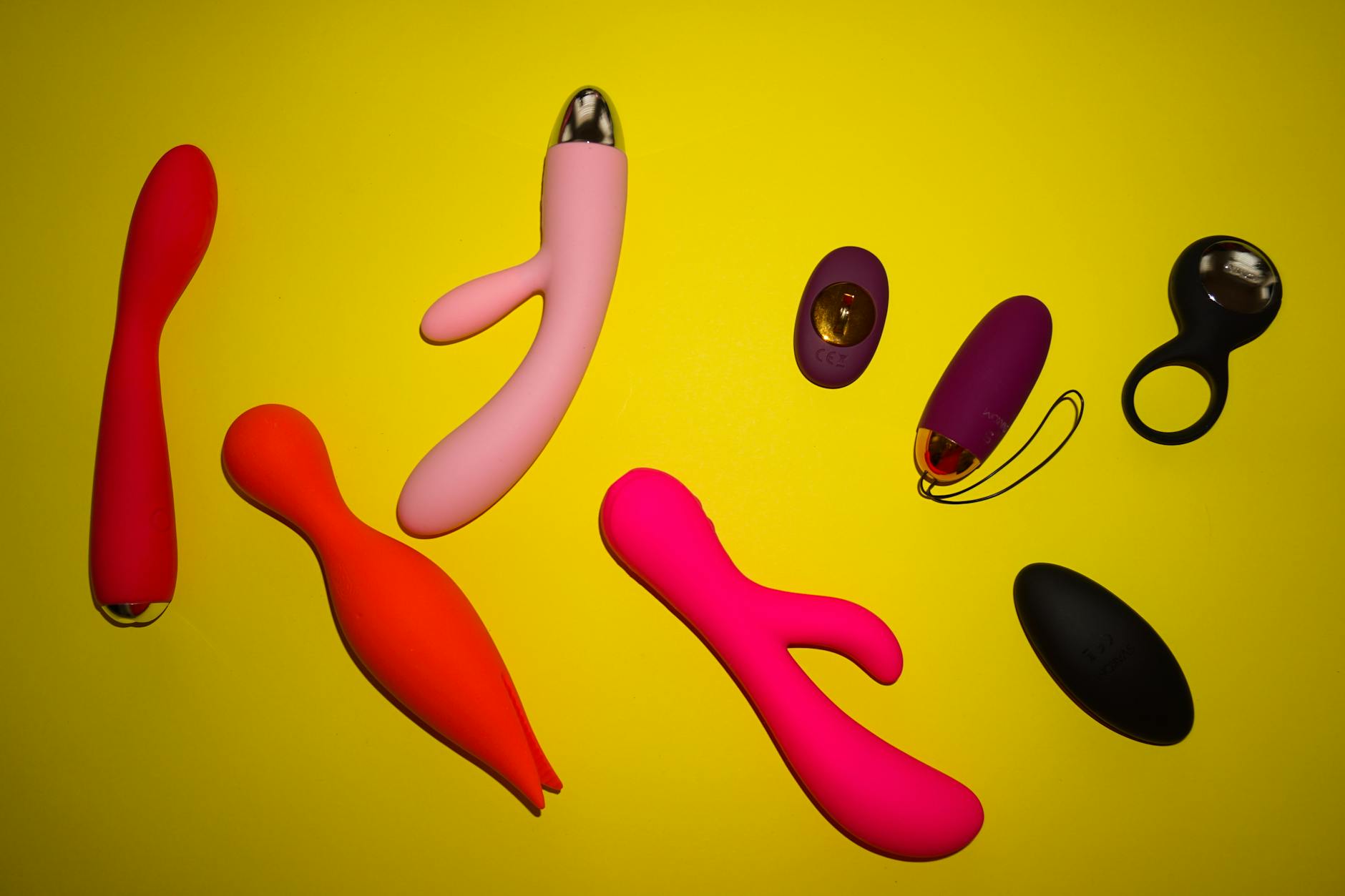
How to Use Lemon Vibrators When Clitoral Sensitivity Changes Throughout Your Cycle
Your body isn't broken. Your clitoral sensitivity genuinely fluctuates across your menstrual cycle. Here's how to work with it, not against it, using lemon vibrators.
Your clitoral sensitivity isn't stable month to month. It rises and falls. Some weeks, even the gentlest stimulation feels overwhelming. Other weeks, you need serious pressure to feel much of anything. If you've been assuming something's wrong with you—or worse, with your toy—here's the truth: your body's doing exactly what it's supposed to do.
Hormone fluctuations across your cycle directly affect how sensitive your clitoris is, how quickly you warm up, and what kind of stimulation actually works. The Lem vibrator and other lemon clitoral vibrators work incredibly well across this shifting landscape, but only if you know how to adjust.
Estrogen and progesterone don't just regulate your period. They actively change the blood flow to your clitoris, the elasticity of the tissues there, and how responsive your nerve endings are to touch.
During your follicular phase—from period start until ovulation—estrogen is climbing. Your clitoris becomes more engorged with blood, the tissue swells slightly, and sensation becomes sharper. This is when direct, higher-intensity stimulation often feels best. Your body wants more.
Arround ovulation, you hit peak sensitivity. Estrogen peaks, blood flow to the clitoral area is at its maximum, and many people report that orgasms are easier to reach and more intense. This is when you might dial up the intensity on your lemon vibrator or switch to patterns that have more sustained pressure.
Then comes your luteal phase. Progesterone rises while estrogen drops. Your clitoris becomes less engorged. Sensation dulls slightly. What felt perfect two weeks ago now feels too intense or not quite enough. You're not broken. Your wiring has just temporarily recalibrated.
Mid-luteal—usually the week before your period—sensitivity often dips lowest. Pain sensitivity also increases, which is why this is often when any kind of aggressive stimulation feels uncomfortable rather than pleasurable.
Instead of using the same intensity and pattern all month, think of your cycle as four different sensitivity landscapes. Each one needs a slightly different approach with your clitoral vibrator.
Week 1: Menstruation and early follicular (days 1-7)
Your clitoris is still slightly swollen from the previous cycle, but sensitivity is relatively flat. Stimulation might feel less responsive overall. Use lower to medium intensities. The Lem works beautifully here because the suction-cup action doesn't require aggressive manual pressure. Start on pattern 1 or 2. Your pelvic floor might also be more tender, so shorter sessions often feel better than long ones.
Week 2: Late follicular and ovulation (days 8-14)
Sensitivity is rising daily. By the end of this week, you're at peak. Start the week at your previous intensity level, but give yourself permission to climb. Many people find this is when they want to explore the higher patterns on lemon vibrators—the sustained pulse or the intense waves. This is also when lubrication usually increases naturally, so your body's already prepped for more.
Week 3: Early luteal (days 15-21)
Sensitivity is dropping, but not dramatically yet. You're still responsive, just less intensely so. You might need to stay at mid-to-high intensity to get the same sensation you had last week. Don't take this personally. It's hormonal. Keep the session length the same, but consider patterns with more variation—the rhythm patterns on your Lem vibrator tend to feel better here than straight intensity.
Week 4: Late luteal (days 22-28)
Sensitivity is at its lowest. Pain sensitivity is up. This is when you want lower intensities, shorter sessions, and gentler patterns. The Lem's air-suction design is especially useful here because it disperses pressure more gently than direct vibration. Some people skip this week entirely. Others find that a quick session at very low intensity works fine. Pay attention to what your body actually wants instead of what you think you "should" want.
Most lemon vibrators come with multiple patterns. Use them strategically.
During high-sensitivity weeks, sustained intensity patterns work best. Your body can handle it, and you probably want direct stimulation that doesn't require as much effort to build arousal.
During medium-sensitivity weeks, rhythm or pulsing patterns often feel more interesting. They give your clitoris something to "work toward" rather than a flat wall of sensation.
During low-sensitivity weeks, skip the patterns entirely. Stick to single-intensity modes, but at the lowest setting. Or consider this the week for partnered play instead, where the added mental stimulation and connection compensates for the physical sensation drop.
Yes. Not because of the toy itself, but because arousal and sensation are amplified by several factors. During high-sensitivity weeks, orgasms come faster earlier in the day when cortisol is higher and you have more mental energy. During low-sensitivity weeks, evening sessions—when you're calmer but also more tired—sometimes feel more connected.
Also, lubrication varies. Your natural lubrication is higher mid-cycle. If you're using a water-based lubricant anyway, this matters less. But if you rely on natural lubrication, the timing absolutely affects how the vibrator glides. Lower-sensitivity weeks might need a little extra lube to avoid any friction that feels uncomfortable.
You don't need an app. You need three weeks of noticing. Next month, pay attention to what intensity and pattern felt best each week. Is there a rhythm? Usually there is. Once you spot it, you can plan ahead instead of being surprised.
Some people write it down. Some just notice "oh, week 3 again, let's drop the intensity." Either works. The point is removing the mystery so that changes in sensation stop feeling like a problem.
You might not have a 28-day cycle. That's fine. You might be on hormonal contraception that flattens some of these fluctuations. Also fine. You might be post-menopausal or using a different method of cycle tracking. None of this disqualifies you from having cyclical sensitivity.
If you're not menstruating, pay attention to other hormonal cycles. Many people notice 4-8 week patterns in overall energy, arousal, and sensitivity even without a visible period. Stress cycles, seasonal changes, and relationship rhythms also affect clitoral sensitivity. Track whatever makes sense for your body.
If your sensitivity doesn't seem to follow a pattern at all, that's also completely normal. Not everyone's clitoris responds to cycle shifts in the same way. Some people barely notice a difference. If that's you, stick with what works year-round and ignore this whole framework.
If you're using lemon vibrators with a partner, this information is actually useful for communication. "I'm in my low-sensitivity week, so I'm going to want lower intensity" removes guesswork and prevents the awkward moment where something that worked last time feels uncomfortable now.
It also prevents the belief that something's wrong with your desire or your body. Your partner understands it's not about them or the toy. It's just biology.
Your clitoris is responsive and adaptive, not broken. The fluctuations are a feature, not a malfunction. Once you understand that sensitivity rises and falls across your cycle and adjust your lemon clitoral vibrator settings accordingly, you stop fighting your body and start working with it. That's when pleasure becomes genuinely easy.
It depends on the method. Hormonal IUDs, the pill, and the patch suppress ovulation, which flattens some of the extreme swings in sensation. You might notice less dramatic changes, but most people still experience some cyclical variation in sensitivity even on hormonal contraception. The hormone dose matters too. Higher-dose pills create bigger swings than lower-dose ones. Pay attention to your own body rather than assuming the pill made all fluctuations disappear.
Technically, yes. But why would you? If you know your clitoris is less sensitive week 4, using week 2's intensity will feel frustrating and exhausting. It's not that you're bad at pleasure. You're just fighting physiology. Adjusting the intensity takes thirty seconds and transforms the whole experience.
Completely normal. Some people's sensitivity drops so dramatically that even low-intensity vibration feels unpleasant. If that's you, take the week off. Use the lemon vibrator weeks 1-3 and explore other forms of pleasure during week 4. Or stick to partner touch, which feels different and might be more comfortable. Your body's signals are valid.
The suction-cup design of the Lem vibrator disperses pressure more evenly than direct vibration, which makes it genuinely useful during low-sensitivity weeks when concentrated pressure feels uncomfortable. That said, the pattern and intensity matter more than the toy type. Any vibrator with adjustable intensity and multiple patterns will work if you're willing to switch between them based on where you are in your cycle.
Yes. The phases shift, but the pattern stays the same. Your follicular phase is just longer, your ovulation happens later, and your luteal phase might also be extended. The weekly breakdown becomes more like "phase 1: weeks 1-2, phase 2: weeks 2-3" depending on your actual cycle length. Track your own body instead of forcing a 28-day model onto a 35-day cycle.
Absolutely. Stress hormones suppress estrogen and raise cortisol, which can mute sensation even when you're supposed to be in a high-sensitivity phase. This is why you might feel "off" during high-stress weeks even though the calendar says you should be sensitive. It's not a cycle failure. It's stress overriding your cycle. Lower stress, and sensitivity usually bounces back.
Dunn, K. M., Cherkas, L. F., & Spector, T. D. (2005). Genetic influences on variation in female orgasmic function. Biology Letters, 1(2), 260-263.
Brotto, L. A., & Yule, M. A. (2011). Physiological and subjective sexual arousal in self-identified asexual women. Archives of Sexual Behavior, 40(4), 699-712.
Meston, C. M., & Frohlich, P. F. (2000). The neurobiology of sexual function. Archives of General Psychiatry, 57(11), 1012-1030.
If you want help understanding your own cycle patterns or how to communicate cyclical shifts with a partner, reach out. That's what I'm here for.