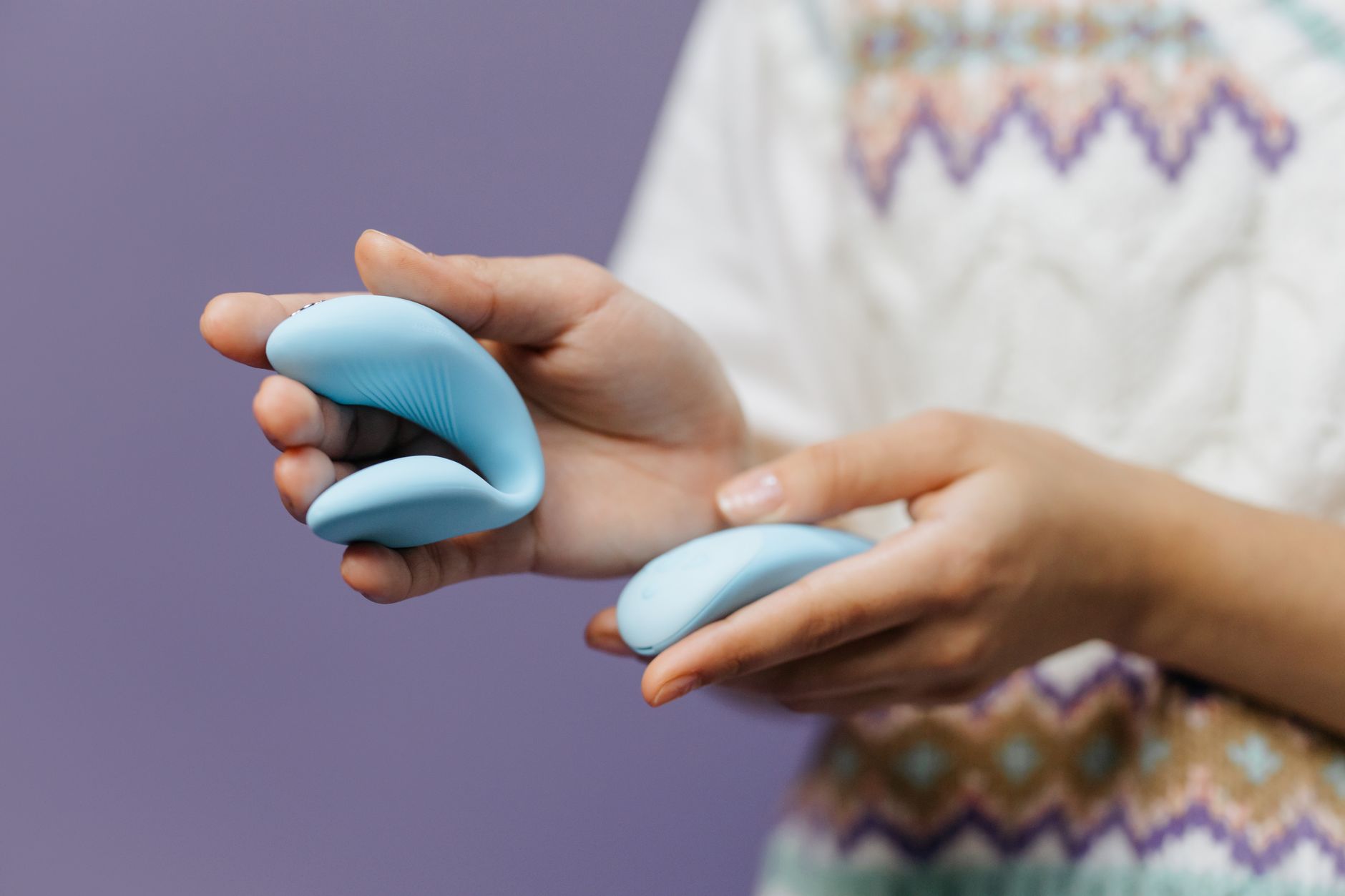
You touch yourself. Nothing happens. Or worse, something happens but you can't feel it properly. It's like the signal between your body and your brain got fuzzy, and your own hand feels like a stranger's hand delivering information you can't quite process. That disconnection is real, and you're not broken.
Here's what I know from working with people on this: numbness during self-touch isn't always about your clitoris losing sensitivity. It's often about the intensity mismatch between what your nervous system needs right now and what manual stimulation can deliver. A lemon vibrator solves this differently than you might think.
Direct hand contact with the clitoris sends consistent, predictable stimulation. Your nervous system can get habituated to that rhythm. After a while, the signal weakens. You're not numb in a medical sense. Your receptors are doing their job. The problem is your brain has learned to tune out that particular frequency of touch.
There's also a comfort issue. If you've spent years using one exact technique, one exact pressure, one exact angle, that becomes your reference point. Anything else registers as "wrong" rather than "different." Your nervous system isn't designed to ignore pleasure. It's designed to ignore the ordinary. Manual touch, after repetition, becomes ordinary.
A clitoral vibrator like a lemon sucker introduces something your hand alone cannot: rhythmic pressure changes combined with suction. The suction element is key. It creates a sensation envelope around your clitoris rather than direct friction on top of it. That's not just different. It's neurologically novel.
Your clitoris has roughly 8,000 nerve endings packed into a small area. Most of those endings respond best to changes in pressure and vibration frequency, not just sustained pressure. When you use your hand, you're offering sustained or rhythmic friction. When you use a lemon vibrator with suction technology, you're offering rapid micro-movements combined with gentle negative pressure.
That combination hits different nerve clusters. Your nervous system perks up because it's being stimulated in a way that requires attention. It cannot tune it out as easily as it tunes out your hand.
There's also a proprioceptive element. Your hand is attached to your body. On some level, your brain treats self-touch as part of your own movement. A vibrator is external. Your nervous system treats it as something happening to you rather than something you're doing. That subtle shift in agency sometimes makes pleasure feel more present, more vivid, less filtered through the cognitive load of "am I doing this right."
First, habituation. Your sensory system is designed to notice change. When stimulation stays identical, your neurons stop firing as enthusiastically. They conserve energy. You're touching yourself the same way you touched yourself last week, last month, last year. Your nervous system has filed that in the "already catalogued" folder.
A lemon clitoral vibrator introduces micro-variations in pressure and frequency that your hand cannot replicate. Each pulse is slightly different. Your nervous system has to stay alert. You cannot zone out because the sensation keeps shifting.
Second, disconnection from arousal. Sometimes numbness during self-touch happens because you're not actually aroused yet. You're going through the motions. Your hand feels absent because you're absent. This is common after stress, medication changes, or relationship shifts. You're touching the right place, but your mind is somewhere else.
With a vibrator, the intensity can override that initial disconnect. Suction-based stimulation creates a sensation so present, so immediate, that it pulls your focus back into your body. It works like a circuit breaker. You cannot think about your work email when your nervous system is that engaged.
Third, threshold mismatch. After hormonal changes, medication, or simply aging, your sensory threshold shifts. What used to feel like enough stimulation now feels like barely touching. Your hand maxes out at a certain pressure. You can't press harder without it becoming uncomfortable. A vibrator, especially one like a lemon sucker, can layer sensations in ways your hand cannot. Suction plus vibration plus specific frequency patterns create intensity without simple pressure.
Start low. If you're coming from a place of numbness, your instinct is to reach for the highest setting. Resist that. Set your lemon vibrator to pattern 1 or 2 and spend time noticing what changes. Where do you feel the suction? What does the vibration rhythm actually feel like when you're paying attention?
This is not foreplay. This is reconnaissance. You're retraining your nervous system to recognize pleasure signals it's been ignoring.
Use it without orgasm pressure. The goal here is not to come. The goal is to feel. When there's no finish line, your nervous system relaxes. Pleasure becomes the event, not the means to an event. That shift alone often restores connection.
Practice for 10-15 minutes, then stop. Don't push to climax. Stop when you start feeling something. That's your nervous system waking up. Let it. Repetition over time teaches your body that this new sensation is worth paying attention to.
Many people find that after a few sessions with a lemon vibrator at low settings, their hand regains efficacy too. The reboot works. You've reminded your nervous system what pleasure signals look like. Your hand can deliver them again, now that the system isn't so tuned out.
If numbness has appeared suddenly, or if it's accompanied by pain, this is worth discussing with a doctor. Spinal issues, nerve compression, certain medications, and hormonal changes can all cause genuine neurological changes. A vibrator helps with habituation and threshold mismatch. It does not address nerve damage.
If you've recently started an antidepressant or other medication and sensation shifted, mention it. Sexual side effects from SSRIs are common and often treatable. Same thing if numbness appeared after pelvic floor tension or trauma. A vibrator is a tool for reconnection, not a fix for underlying conditions that need professional attention.
That said, most of the time when people report clitoral numbness during self-touch, it's habituation or arousal disconnect. A lemon vibrator addressing the sensation mismatch often solves the whole problem in weeks.
Honestly though, sometimes numbness during self-touch comes with a side of shame. You feel like you should be able to pleasure yourself without a toy. You feel like needing a vibrator means something is wrong with you.
Nope. Needing a vibrator means you've discovered a tool that works better. That's not a failure. That's information. Your hand is always available. A lemon clitoral vibrator offers something your hand cannot: novelty, suction technology, and the ability to hold pressure and rhythm longer than your arm can.
Use what works. Your pleasure matters more than the method.
Vibration and suction create micro-variations in pressure that your hand cannot replicate. Your nervous system habituates to consistent stimulation. A vibrator introduces novelty. Plus, suction creates a sensation envelope rather than direct friction. Your sensory receptors fire differently.
Actually the opposite. Most people find that using a vibrator for a few weeks resets their system. Your hand regains its effectiveness because you've reminded your nervous system what pleasure signals look like. Vibrators often jumpstart sensation, not diminish it.
Start with pattern 1 or 2 on a lemon clitoral vibrator. Low settings introduce sensation without overwhelm. You're retraining your nervous system, not shocking it. Spend 10-15 minutes noticing what you actually feel. Then stop. Repetition over intensity works better for reconnection.
Yes. SSRIs, hormonal birth control, blood pressure meds, and others can reduce sensation. If numbness appeared after starting a new medication, mention it to your doctor. That said, a lemon vibrator can often help bridge the gap while you and your doctor figure out whether the medication needs adjusting.
Not always. Habituation, arousal disconnect, and threshold mismatch are the most common causes and a vibrator solves all three. If numbness appeared suddenly, is accompanied by pain, or coincides with other neurological symptoms, see a doctor. Otherwise, try a vibrator for 2-3 weeks before assuming anything is broken.
Many people notice a shift within 5-7 sessions. Your nervous system responds quickly to novelty. After 2-3 weeks of regular use, most people find their sensitivity and connection restored. Some continue using the vibrator because it feels better than their hand. That's also fine.
When your own hand stops delivering what it used to, it feels like a loss. Like something in your body shut down. But usually what happened is much simpler. Your nervous system got efficient. It learned to ignore signals it classified as routine.
A lemon vibrator wakes that system back up. Suction-based clitoral vibrators work because they offer something your hand cannot: the precise combination of pressure, vibration, and novelty that your nervous system cannot ignore. You're not fixing yourself. You're just reminding yourself what pleasure feels like when it's actually present.
If you want to explore further or talk through what's happening with your body, The Lemon Intimacy is here. You can reach out anytime.
Greek, R., Bender, N. (2013). Pleasure and the brain. In Proceedings of the European Conference on Sexual Health. Research on neuroplasticity and sensory habituation confirms how repeated identical stimuli reduce neural firing rates and subjective intensity perception.
Ottenbruch, A., et al. (2020). Clitoral innervation and sensory perception. Journal of Sexual Medicine, 17(8). Documentation of the 8,000+ nerve endings in the clitoris and their frequency-dependent response patterns.
The Lemon Intimacy research team conducted community surveys on vibrator efficacy for reconnecting sensation after habituation. Participants reported significant improvement in arousal and sensation within 3-4 weeks of consistent use.