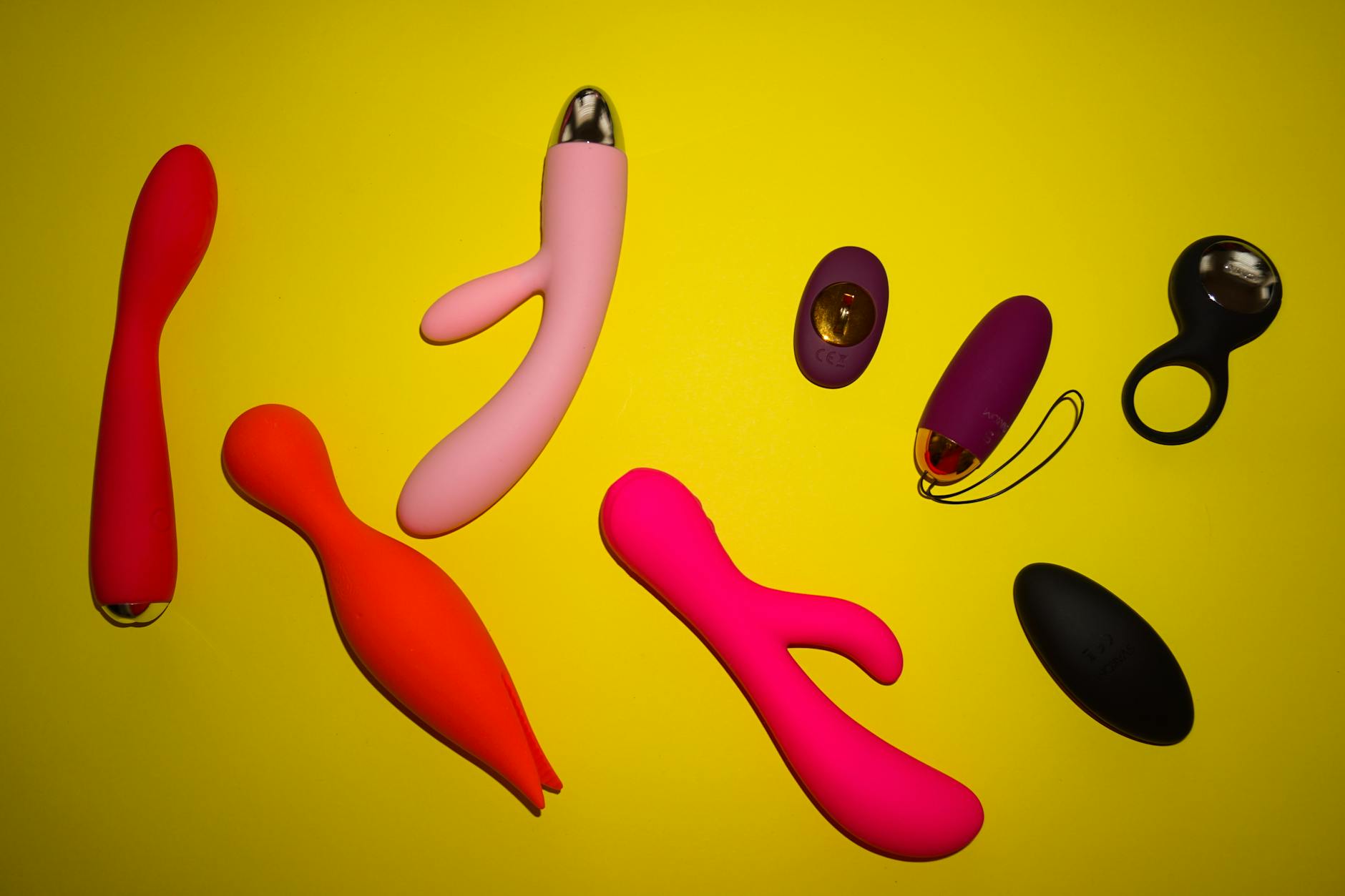
Here's what nobody tells you about birth control and sensation
You start a new hormonal birth control. Within weeks, you notice something's off. Your clitoris doesn't respond the same way. The intensity that used to hit at setting 3 on your lemon vibrator now barely registers until you're at 5 or 6. Or the opposite happens. Suddenly everything feels overwhelming.
This isn't broken. This is hormones rewriting your nervous system in real time.
How hormonal birth control changes clitoral sensitivity
Hormonal birth control suppresses your natural estrogen and testosterone fluctuation. Both of those hormones directly affect clitoral blood flow, tissue thickness, and nerve sensitivity. When you flatten out your hormonal cycle, you're essentially removing the monthly peaks and valleys that normally create variation in how your body responds to stimulation.
Here's what actually happens at the cellular level. Estrogen affects the elasticity of vaginal and clitoral tissue. It also influences the density of nerve receptors in the clitoris. Testosterone (yes, people with ovaries produce it) drives baseline desire and genital sensation. Hormonal contraceptives lower both.
The result: your clitoris becomes less engorged during arousal. It takes longer to swell. The nerve endings fire more slowly. When you use a lemon vibrator, you're working with tissue that's thinner and less responsive than it was before you started the pill, ring, shot, or implant.
Why intensity feels different on your lemon clitoral vibrator
Three major shifts happen after you start hormonal birth control.
Sensitivity drops. You might need higher intensity to feel what you used to feel at lower settings. A lemon sucker that worked perfectly on setting 2 might now feel like setting 1 barely registers. This is so common that when people switch contraceptives, the first thing they tell me is, "My vibrator doesn't work the same way."
Arousal takes longer. The warm-up period extends. Before birth control, maybe you got turned on in 5 minutes. Now it's 15 or 20. Your clitoris doesn't engorge as quickly. Your lubrication might start slower. Using your lemon vibrator before your body's ready feels pointless or even slightly uncomfortable.
Orgasms change shape. Some people report orgasms feel more distant or muted. Others say they're more plateaued, less of a sharp peak. The intensity varies depending on which hormonal contraceptive you're using. The pill typically causes more noticeable changes than the copper IUD. Progestin-only methods sit somewhere in the middle.
Which birth control methods hit sensation hardest
Not all contraceptives affect pleasure equally. Understanding which ones carry the biggest sensory impact helps you know what to expect.
Combined hormonal pill, ring, patch. These suppress both estrogen and testosterone, so the sensory shift is usually most noticeable. People often report needing higher intensity on lemon vibrators and taking longer to orgasm.
Progestin-only pill (mini-pill). Gentler hormonal suppression than combined methods. Some people feel minimal change. Others notice moderate shifts in sensitivity and arousal speed.
Hormonal IUD. Releases hormones locally into the uterus, not systemically like the pill. Many people report less dramatic pleasure changes, though sensation shifts still happen for some.
Copper IUD. Nonhormonal. Your natural hormonal cycle stays intact. Clitoral sensation should feel like it did before. If pleasure changed after inserting a copper IUD, the cause is usually something else, like a pelvic floor response or psychological adjustment.
Implant or shot. Progestin-based and systemic. Typically lands in the middle for sensory impact, though individual variation is wild.
What to do when your lemon vibrator suddenly feels wrong
Here's the practical stuff. Four adjustments work for most people dealing with birth control and sensation changes.
Extend your warm-up. Add 10-15 minutes before introducing your lemon vibrator. Touch your clitoris with your hands first. Let arousal build naturally. Use lower settings on your vibrator than you used to. Your body's not broken. It just needs more time to wake up.
Start lower, move higher. If you were using pattern 4, begin at pattern 2. Spend real time there. Let sensation register. You'll likely find a new baseline that feels satisfying. Some people never return to their old settings. Some do after a few months. Both are normal.
Switch lubrication strategies. If you're feeling less natural lubrication with hormonal birth control, water-based lube becomes your friend. It's not a sign something's wrong. It's just what your body needs right now. Apply it generously to your clitoris before using your lemon clitoral vibrator.
Pay attention to your cycle, if visible. Even on hormonal birth control, some people notice micro-fluctuations in sensitivity. Progestin-only pills and some IUDs allow for slight monthly variation. If you're taking the pill, your placebo week might feel slightly different. Track it. Adjust accordingly.
The emotional piece that matters more than you think
Here's where most articles go wrong. They focus only on the physical changes and skip the psychological part. But sensation isn't just nerve endings. It's also expectation, confidence, and how you feel in your body.
When your vibrator suddenly doesn't work like it used to, your brain goes to a dark place fast. "Something's broken. I'm broken. My body doesn't work anymore." That narrative spiral makes arousal harder, which makes sensation feel even more muted. You've basically created a feedback loop of disconnection.
Break the loop by separating the facts from the story. Fact: hormonal birth control changed your tissue sensitivity. Story: you're permanently broken. Those are completely different things. Recognizing the difference is half the battle.
Talk to your partner about what's shifting, if you have one. Not as a confession or apology. As information. "I'm on a new contraceptive and my body's responding differently to stimulation. We're going to need to adjust our approach, and here's what helps." That conversation removes shame and creates space for real problem-solving.
When it's time to reconsider your contraceptive
If pleasure loss is severe and persistent after 3-4 months, or if it's affecting your relationship or self-image significantly, talk to your gynecologist or sexual health provider. You have options.
Switching to a different hormonal method might help. Sometimes moving from the pill to an IUD or vice versa restores sensation more than you'd expect. A copper IUD eliminates hormonal suppression entirely. Some people find that a lower-dose pill hits lighter than their original choice.
You don't have to stay on a contraceptive that tanks your pleasure. Your sexual health matters as much as your reproductive health. A good provider will help you find something that protects you AND feels good in your body.
What usually bounces back within a few months
For most people, the biggest sensation changes settle down after 3-6 months on a new contraceptive. Your body adapts. You discover new patterns that feel good on your lemon vibrator. Your baseline shifts, but you find the rhythm again.
Some sensation loss stays. That's real. But most people find that once they stop expecting their pleasure to work exactly like it did before, they uncover new ways to get there. A lemon sucker at a higher setting. A longer warm-up. A different positioning. Different mental focus. The pleasure's still there. It just has a new address.
Your body isn't punishing you for choosing a contraceptive that works. It's adapting to a new hormonal environment. Give it time. Adjust your approach. And know that thousands of people are using their lemon vibrators with complete satisfaction while on the exact same birth control you're on. You're not alone in this shift, and you're absolutely not broken.
FAQ: Birth control, sensation, and clitoral vibrators
How long does it take for lemon vibrators to feel normal again after starting birth control?
Most people notice the biggest sensation shifts within the first 2-3 weeks. For many, things stabilize after 3-6 months as your body adjusts to the new hormone levels. Some people adapt faster, some slower. If it's been more than 6 months and sensation loss is severe, that's worth discussing with your provider. It's not permanent, but it might mean trying a different contraceptive method.
Can I use a lemon clitoral vibrator on a higher setting if birth control dulled my sensation?
Absolutely. Higher settings aren't inherently harmful. What matters is comfort and what feels good. If your lemon vibrator's higher patterns feel amazing, use them. Just pace yourself. Overuse of intense vibration, even at baseline, can cause temporary numbness. Alternate between higher and lower settings. Take breaks between sessions. Listen to your body's feedback.
Does the copper IUD cause the same sensation loss as hormonal birth control?
No. The copper IUD is completely nonhormonal, so your estrogen and testosterone levels stay natural. Your clitoral sensitivity should feel the same as before you got it. If sensation changed after inserting a copper IUD, look at other factors. Pelvic floor tension from the insertion experience. Psychological adjustment. Partners touching you differently. Those are worth exploring with a pelvic floor specialist or therapist.
What if my partner doesn't understand why my lemon vibrator feels less intense now?
Start with data, not emotion. Explain that hormonal birth control suppresses estrogen and testosterone, which directly affects genital blood flow and nerve sensitivity. It's not about attraction or desire. It's physiology. Then shift to the practical: "Here's what I need now." More time before penetration. Different vibrator settings. Longer sessions. Specific touch. Making it about teamwork instead of something broken helps most partners get it.
Can switching from a pill to an IUD help restore sensation faster?
Sometimes. Hormonal IUDs deliver hormones locally, which causes less systemic suppression than a pill for some people. Copper IUDs eliminate the hormonal piece entirely. If you're on a pill and sensation loss is bothering you, talking to your doctor about switching is worth doing. Just know that the IUD adjustment period itself takes time. You might not feel the full impact for a few months.
Is it normal to feel oversensitive instead of numb on hormonal birth control?
Completely normal. A smaller subset of people report that their clitoris becomes more sensitive on hormonal birth control, or that lower settings feel overwhelming. If that's you, start at the gentlest setting on your lemon clitoral vibrator. Use shorter sessions. Focus on slower, wider patterns instead of intense pulsing. Your body's not broken. It's just wired differently right now. Experiment until you find what works.
One more thing
Your pleasure deserves the same attention as your health. Birth control is an important decision that affects multiple systems in your body, and sensation is legitimately part of that conversation. If you're struggling with how your body feels on your current contraceptive, that's information worth paying attention to. You have choices. Use them.
If you want to talk through what's shifting in your body or your relationship, reach out. We're here for the real conversations.